Key takeaways
- A deposit should release a defined stage of work. It should not rely on an open-ended instruction to “start the order.”
- The supplier, contracting party, invoice issuer, and payment recipient may not always use the same name. Record and explain every difference before payment.
- Freeze the product specification, quotation basis, quantity, packaging, and delivery term before calculating the production deposit.
- Keep sample, tooling, packaging development, and mass-production payments on separate lines, even when they appear on one invoice.
- A payment method can create a transaction record, but it cannot correct an incomplete specification or guarantee that the finished goods will conform.
What does paying a supplier deposit actually authorize?
A deposit is an advance payment linked to a commercial commitment. Depending on the order, it may authorize the supplier to buy material, reserve capacity, make tooling, develop packaging, or begin mass production. Those are different commitments. The payment record should state which one applies.
For a ready-stock order, the first payment may reserve existing units. For a custom order, the supplier may need a sample or tooling payment before a production price can be finalized. If the product is still being developed, call the payment a sample, development, or tooling payment rather than treating it as the deposit for the full production order.
There is no single deposit percentage that fits every Chinese supplier or product. The amount depends on the manufacturing process, material commitment, order value, bargaining position, supplier history, and payment route. The useful question is: what work and cost exposure does this payment release, and what control remains before the next payment?
Build a pre-deposit release file
Do not assemble the order from scattered chat messages after a problem appears. Create one file set before payment and give each controlled document a date or revision number.
| Record | What to confirm | Why it matters before payment |
|---|---|---|
| Supplier identity | Chinese legal name, Unified Social Credit Code, business role, factory address, and contact | Identifies the party expected to perform the order |
| Payment instruction | Beneficiary name, bank or platform account, currency, amount, fees, and payment reference | Connects the transfer to the intended recipient and order |
| Purchase order | Buyer, seller, product, quantity, price, payment milestones, delivery term, and signatures or written acceptance | Records the commercial agreement instead of relying on a quotation alone |
| Product specification | Materials, components, dimensions, tolerances, finish, function, accessories, and revision | Defines what the supplier must make |
| Approved reference | Sample ID, photographs, drawing, artwork, colour reference, and accepted deviations | Gives production and inspection a traceable standard |
| Packaging specification | Unit pack, insert, labels, barcode, manual, carton quantity, marks, and artwork revision | Prevents packaging from remaining an unpriced or unfinished part of the order |
| Production plan | Deposit date, approval dependencies, material schedule, production start, completion, and inspection window | Explains when the quoted lead time begins |
| Quality plan | Tests, defect criteria, inspection timing, sampling basis, corrective action, and reinspection | Defines the evidence needed before the balance or shipment release |
Verify the legal seller and payment recipient
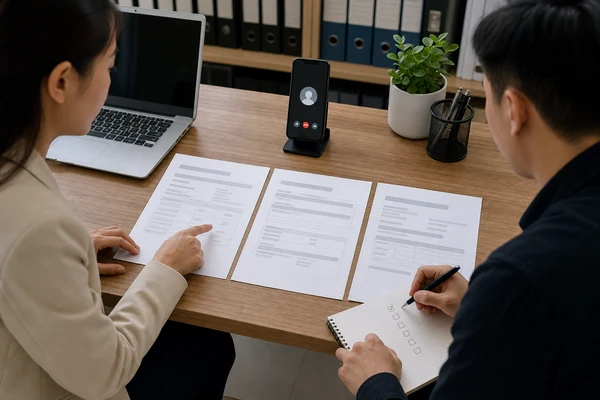
Ask for the supplier’s Chinese business licence and copy the legal company name and Unified Social Credit Code from the document. Search the name or code in China’s National Enterprise Credit Information Publicity System. Compare the registered status and address with the supplier information you have already collected.
The store operator, factory, exporter, contracting company, and payment recipient can be different entities for a legitimate commercial reason. A trading company may use a partner factory. A supplier may use an export company to receive foreign currency. A sourcing agent may collect the buyer’s payment and settle several domestic orders in CNY. Ask for a written explanation of the relationship and keep it with the order.
Stop when the names change without explanation, the beneficiary is an unrelated individual, or the supplier asks you to hide the purpose of payment. A personal account is not automatic proof of fraud, especially for small domestic transactions. It does change the recovery, accounting, and evidence available to an overseas business. Have your finance or compliance adviser review the arrangement before proceeding.
Verify bank details through a second channel
Invoice and email threads can be intercepted. The FBI’s business email compromise guidance advises businesses to verify payment requests and any change in account number or payment procedure directly with the person making the request. Use a phone number or account that you already know, not contact details supplied in the message that announced the change.
For a first transfer, compare the beneficiary with the purchase order, invoice, supplier licence, platform account, and earlier verified instructions. For a changed account, pause payment even if the message comes from a familiar email address or sits inside a genuine conversation. Confirm it by voice, platform chat, or another established channel and obtain a corrected invoice.
Set an internal approval rule for larger transfers. One person prepares the payment, another checks the order and beneficiary, and the final authorization follows the buyer’s own finance policy. This does not prove that the supplier will perform, but it reduces avoidable payment-instruction errors.
Freeze the product before releasing a production deposit
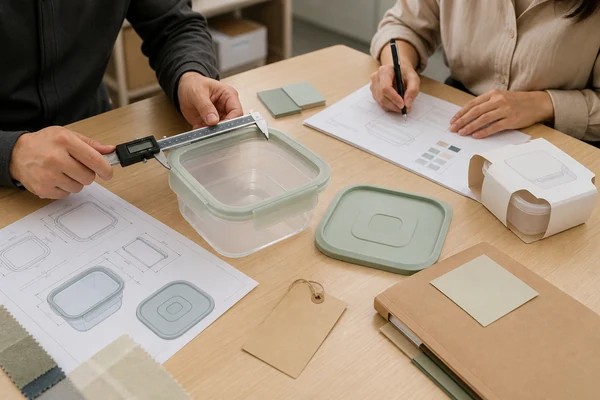
A supplier needs a fixed target before its production price and output can be judged. Link the purchase order to a controlled product specification. It should identify the material, dimensions, components, finish, colour, function, branding, accessories, and permitted tolerances that apply to the order.
If a sample has been approved, record its sample number, date, and approval status. Attach the drawings, photographs, test results, artwork files, and accepted deviations that make the sample usable as a production reference. Dawon1688’s product sample approval checklist explains how to turn a sample into a measurable standard.
Sometimes the supplier needs money before a final pre-production sample can exist. In that case, limit the payment to the defined development stage. State that mass production still requires a separate written release after the sample, specification, and price are approved. Paying for a mould or prototype should not silently authorize thousands of finished units.
Separate production deposits from one-time project costs
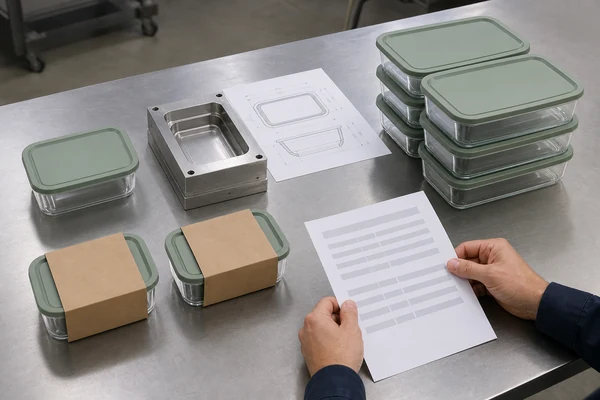
A single total can hide several commitments. Keep them visible even if the supplier asks for one transfer.
| Payment line | Evidence before payment | What the payment may release |
|---|---|---|
| Sample or prototype | Sample brief, price, expected output, revision rounds, and courier arrangement | Making and sending the defined sample |
| Tooling | Tool description, drawings, cavities, expected life where relevant, ownership, storage, and transfer terms | Tool design, fabrication, trial, and correction |
| Packaging development | Dieline, material, print proof, sample quantity, plate or setup charge, and file ownership | Artwork preparation, proofing, or packaging sample work |
| Mass-production deposit | Accepted purchase order, frozen specification, quantity, schedule, and payment milestone | Material commitment and production for the stated order |
Tooling deserves particular care. Record what the payment buys, who owns the completed tool, where it will be stored, whether it can be inspected, and what happens if the project moves to another factory. The guide to protecting a product design with a Chinese supplier covers controlled disclosure, tooling records, and production files in more detail.
Write payment milestones as amounts and events
Percentages alone are incomplete. For every payment, record the amount, currency, due event, beneficiary, payment method, bank or platform fees, and evidence required for release. If the quotation uses price breaks or an exchange-rate condition, state which quantity and rate basis apply.
A workable schedule might separate sample approval, production deposit, tooling completion, pre-shipment inspection, and final release. The actual sequence depends on the order. Avoid copying a generic schedule when the supplier must purchase unusually expensive material or when the buyer has not approved the product.
Define the balance trigger with equal care. “Before shipment” can mean before inspection, after a passed inspection, before loading, or before the supplier sends goods to a China warehouse. Write the event and the evidence. For finished production, the article on inspecting a bulk order before balance payment explains what a useful inspection report should cover.
Put commercial remedies and change control in writing
The order document should explain what happens if the supplier cannot meet the agreed specification, quantity, or schedule. State who decides whether goods are corrected or remade, who pays for reinspection, and how any price adjustment, refund, or credit is calculated. Also cover cancellation after materials or tooling have been purchased. The wording and enforceability depend on the governing law and facts, so obtain qualified legal advice for material orders or custom contracts.
Require written approval before the supplier changes a material, component, process, subcontractor, tooling location, or production site that may affect the product. A cheaper substitute introduced after the deposit can change performance, appearance, durability, or compliance. The supplier should identify the proposed change and its effect on price and lead time before using it.
Also state how delayed buyer approvals affect the schedule. If artwork, packaging text, test decisions, or sample comments arrive late, the original completion date may no longer be realistic. A fair record separates supplier delay from a project that was still waiting for buyer input.
Confirm when production lead time starts

“Production takes 25 days” is not a complete schedule. Ask which event starts day one. It may be receipt of cleared funds, sample approval, final artwork, material arrival, or completion of all four.
Break the timeline into the steps that can block one another: material procurement, tooling or setup, production, finishing, packaging, inspection, correction, and delivery to the agreed handover point. Record planned dates rather than relying only on a total number of days.
Ask whether any process will be subcontracted and whether peak-season capacity or material availability has been checked. The supplier does not need to promise a date it cannot control. It does need to tell the buyer which dependency remains open before accepting money against a schedule.
Resolve compliance work before the order becomes expensive to change
The destination market and intended use determine which product rules, labels, warnings, tests, and documents may apply. Confirm that work before the production deposit when a late material or construction change would make earlier samples and reports unusable.
Do not treat a supplier’s certificate image as a general approval for your order. Check the issuing body, report number, tested model, material or component scope, applicable rule or standard, applicant, factory, and date. Decide whether the exact finished product needs testing or documentation in the buyer’s name.
Responsibility does not automatically move to the factory because it supplied a report. For example, the U.S. Consumer Product Safety Commission states that the importer must issue the General Certificate of Conformity for an overseas-manufactured general-use product subject to its certification rules. The European Union’s product compliance guidance likewise sets checks for importers placing products from outside the EU on its market. Buyers should identify the rules for their own product and destination rather than copying a checklist for another category.
Do not let the Incoterms rule stand in for a sales agreement
State the selected Incoterms rule, named place or port, and version, such as “FCA named terminal, Incoterms 2020.” This helps assign specified delivery tasks, costs, and risks. It does not define when the deposit is due or who owns the goods.
The International Chamber of Commerce’s Incoterms 2020 Q&A explains that the rules do not cover the time, place, method, or currency of payment, remedies for breach, or transfer of ownership. Put those matters in the purchase order or sales contract.
If one document says EXW, another says FOB, and the chat promises delivery to a warehouse, resolve the conflict before payment. Dawon1688’s guide to comparing Chinese supplier quotations shows how to put competing offers on the same product and delivery basis.
Match the checks to the payment route
A platform checkout, bank transfer, card payment, payment service, or sourcing-agent arrangement produces different records and dispute procedures. Confirm which party appears as seller, who receives the money, what order information is captured, what fees apply, and which events fall outside the payment provider’s process.
For a 1688 order, keep the product link, supplier conversation, order number, confirmed attributes, transaction record, and refund or dispute terms that apply to the actual checkout route. When a sourcing agent collects funds for several suppliers, request an itemized quotation that separates goods, domestic freight, services, exchange basis, and later international shipping. The 1688 payment guide for international buyers compares the payment routes and account requirements.
A familiar payment method does not repair an unclear custom order. A payment provider can evaluate only the records and rules within its service. Product revisions, inspection rights, tooling ownership, and private commercial promises still need written evidence.
Warning signs that should stop the transfer
- The beneficiary or account changes shortly before payment and the change cannot be verified through an established channel.
- The supplier pressures the buyer to transfer immediately or split the payment to unrelated recipients without a documented reason.
- The invoice, purchase order, supplier licence, and payment instruction identify different parties with no explanation.
- The supplier asks for a production deposit while the material, quantity, packaging, or product revision is still open.
- The quotation does not state the currency, delivery basis, one-time charges, or conditions that can change the price.
- The factory will start production before the buyer has defined the approval sample, change procedure, or inspection plan.
- The supplier refuses to acknowledge the purchase order or keeps important promises only in temporary voice messages.
- The final balance is due before the buyer can obtain the evidence required by the agreed quality plan.
A warning sign calls for clarification or a different structure. It does not, by itself, prove fraud. Keep the payment on hold until the people, documents, and account details describe one coherent transaction.
Pre-deposit checklist for a Chinese supplier order
- Verify the supplier’s Chinese legal name, registration code, status, and business role.
- Identify the factory, seller, exporter, invoice issuer, and payment recipient, then explain any differences.
- Confirm the beneficiary and payment instructions through a second trusted channel.
- Approve the final quotation and move its terms into a purchase order or sales agreement.
- Attach the controlled product, artwork, packaging, and approved-sample revisions.
- Separate sample, tooling, setup, packaging development, and production amounts.
- Record the deposit amount, currency, fees, due event, and payment reference.
- State exactly what work the deposit authorizes and which approvals still block mass production.
- Confirm the lead-time start event, planned stages, subcontracted work, and inspection window.
- Define change approval, defect handling, rework, reinspection, delay, and cancellation terms.
- Resolve applicable testing, certification, labelling, and importer documentation requirements.
- Set the evidence required before the balance payment and shipment release.
If the order involves several suppliers, unclear domestic settlement, or a custom project that still needs supplier coordination, send the available product links and requirements through the Dawon1688 contact page for an itemized sourcing review.
Final answer
Pay a supplier deposit only after the legal parties, beneficiary, product revision, commercial terms, authorized work, production trigger, quality controls, and later payment evidence agree with one another. If the sample or specification is still open, limit the payment to that development stage and withhold the mass-production release.
Frequently asked questions
1. Can I pay a production deposit before the final sample is approved?
You can, but it increases the chance that finished goods will be made before the reference is settled. A safer structure is to pay only for the sample, tooling, or material that must be prepared first. State that mass production requires a separate written release after the final sample and specification are approved.
2. What name should appear as the beneficiary of the deposit?
The beneficiary should be a party whose relationship to the order is documented, normally the contracting supplier, an agreed exporter, a platform-designated recipient, or the buyer’s appointed sourcing agent. Compare the name with the invoice and purchase order. If it differs from the factory or seller, obtain a written explanation before payment.
3. When should the quoted production lead time start after I pay the deposit?
Use the start event written in the accepted order. It may be the date cleared funds arrive, but custom production often also depends on the approved sample, final artwork, confirmed specification, or available material. Ask the supplier to acknowledge when every stated condition is complete and record the revised completion date if one remains open.
4. Should tooling fees and the production deposit be paid together?
They may be transferred together, but they should remain separate lines with different deliverables. The tooling line should describe the tool, trial and correction work, ownership, storage, and transfer conditions. The production line should identify the finished-goods order and the approval that releases it.
5. Does a platform payment automatically protect a customized order?
No payment route automatically corrects an incomplete custom-product agreement. Check the protection or dispute terms shown for the actual transaction, keep the order within the supported process, and record the product specification and approved evidence. Requirements agreed only outside the order record may be harder to prove.
6. What proof should I receive after the supplier gets the deposit?
Keep the payment receipt and ask the supplier to acknowledge the amount, currency, order number, and date received. Then obtain the next evidence required by the schedule, such as a material order confirmation, production plan, tooling progress record, or planned sample date. The evidence should match what the deposit was meant to release.
7. Is a supplier deposit refundable if production has not started?
Refundability depends on the written agreement, payment route, costs already committed, and governing law. Define cancellation and refund terms before payment, including treatment of purchased materials, completed tooling, bank fees, and supplier work. If a dispute has legal or material financial consequences, obtain advice for the contract and jurisdiction involved.
Sources
- National Enterprise Credit Information Publicity System: Chinese company registration search
- Federal Bureau of Investigation: Business Email Compromise
- Internet Crime Complaint Center: Business Email Compromise protection guidance
- International Chamber of Commerce: Incoterms 2020 questions and answers
- U.S. Consumer Product Safety Commission: General-use product certification and testing
- European Union: General product compliance and importer obligations