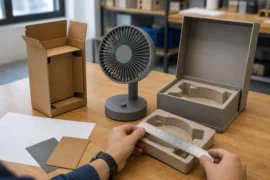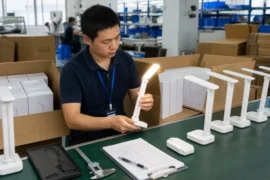
Most of the suppliers on 1688.com are manufacturers. They tend to focus on one or several products and are very familiar with their own products. If you have any questions about the products, they can give professional answers. As manufacturers, they can sacrifice profits for quantity, because only a large quantity of orders can support the normal operation of a factory and feed a large number of workers. If workers resign frequently, it is difficult to improve production efficiency and control product quality, so their prices are the most competitive, and often have a lot of space for negotiation.
Most of the suppliers on Alibaba.com are traders, even if they claim to be manufacturers. Traders will not focus on one or a certain type of product, what they pursue is profit, and like to sell popular products. Trading companies have a small number of employees and low operating costs. For a high-profit order, they would rather wait for a long time and use language advantages to communicate patiently with customers and manufacturers than to reduce profits and make a quick deal.
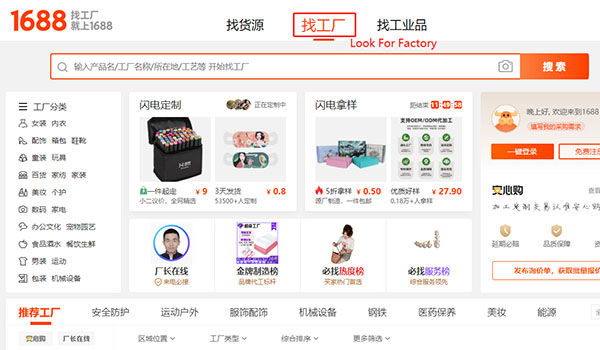
Today is the era of e-commerce, and e-commerce has sprung up in countries all over the world, bringing a huge impact on the offline real economy. At least half of the sellers on AliExpress, Amazon, eBay, Lazada, Shopee and other well-known e-commerce platforms are from China.
Most of these Chinese sellers purchase goods from 1688.com, and even go directly to the factory to negotiate face-to-face with 1688 suppliers, so the prices they get are very competitive. The larger the order, the faster the delivery. In addition, they generally have warehouses and workers to inspect the quality of the goods, label them, and repackage them. A small part of the goods are sent by expensive but fast international express, while most of the remaining goods are sent by cheap but slow sea freight, so that logistics costs can be reduced.
The competition on the e-commerce platform is fierce. Local sellers have language advantage, tax policy advantage, and local storage cost advantage. However, if they want to compete with Chinese sellers, purchasing products from 1688.com is a must. Take advantage of cheap Chinese labor to do quality inspection, labeling and repackaging, which can ultimately greatly reduce the cost of the product and effectively control the quality of the product.
Related Articles
- How to Buy Directly from Manufacturers in China?
- How to Buy Directly from China?
- How to Import from China?
- How to Start Importing from China?
Frequently Asked Questions
How can I identify real manufacturers versus trading companies on 1688?
Look for the ‘manufacturer’ (changjia) badge on supplier profiles, check business license type (manufacturing vs. trading), review factory photos and videos, and examine product specialization. Real manufacturers typically focus on a narrow product range, have consistent factory images, and list their production capacity. Trading companies often sell diverse, unrelated products.
What are the benefits of sourcing directly from factories instead of trading companies?
Direct factory sourcing offers lower prices (no middleman markup), better customization options, direct technical communication with production teams, greater quality control, and the ability to build long-term manufacturing partnerships. Factories can also provide more flexible MOQs and faster production turnaround for repeat orders.
How do I verify that a 1688 supplier is an actual manufacturer?
Request a copy of their business license (yingye zhizhao) and check if the business type is ‘manufacturing.’ Ask for real-time factory photos or video calls showing the production floor. Check if their registered address matches a factory zone rather than an office building. Verified manufacturers on 1688 also display factory audit badges.
Can I visit a manufacturer’s factory found on 1688.com?
Yes, many 1688 manufacturers welcome factory visits, especially for serious buyers. You can arrange visits directly through the platform’s messaging system or through a purchasing agent. Factory visits allow you to inspect production lines, quality control processes, and build trust with the supplier before placing large orders.
What is the difference between OEM and ODM when sourcing from 1688 manufacturers?
OEM (Original Equipment Manufacturing) means the factory produces products to your exact specifications and design, while ODM (Original Design Manufacturing) means the factory offers their own designs that you can brand with your logo. OEM requires higher MOQs and development costs but gives you unique products; ODM is faster and cheaper but products may be available to competitors.
How do I negotiate prices directly with manufacturers on 1688?
Start by ordering a sample to establish the relationship, then discuss volume pricing for larger orders. Reference competitor quotes to anchor negotiations. Ask about price breaks at different quantity tiers. Building a long-term relationship and committing to repeat orders often yields the best pricing from manufacturers.
What MOQs do 1688 manufacturers typically require?
MOQs vary widely by product and customization level. Ready-made products may have MOQs as low as 1-10 pieces. Custom OEM products typically require 100-1,000 pieces depending on complexity. You can often negotiate lower MOQs by paying a slightly higher unit price, especially when building a new supplier relationship.