Key takeaways
- A confidentiality agreement cannot replace a trademark, patent, design right, or documented trade secret programme.
- Share enough information for the current decision. A supplier screening a quotation rarely needs the complete source file, formula, firmware, or customer list.
- Name the Chinese legal entity, actual production site, approved subcontractors, permitted use, tooling ownership, and file-return duties in writing.
- Keep dated evidence of creation, filings, disclosures, approvals, revisions, payments, samples, supplier access, and suspected copying.
Start by identifying what you need to protect
“My product design” is usually a bundle of different assets. A logo, a mechanical feature, a product shape, and a private customer list do not receive the same kind of protection. List the assets before contacting suppliers, then decide which ones must leave your company for quotation or production.
| Asset | Possible protection or control | Evidence to keep | Common sourcing gap |
|---|---|---|---|
| Brand name and logo | Trademark search and registration in the markets that matter | Original artwork, use records, search results, applications, and registrations | The buyer prints the brand on samples before checking or filing it in China |
| Technical solution | Patent advice, confidentiality before filing, and restricted disclosure | Dated drawings, inventor records, test data, filing documents, and disclosure log | Detailed drawings are sent to many suppliers before a filing decision |
| Product appearance | Design protection, controlled images, and clear ownership of design work | Design history, renders, drawings, prototypes, filing records, and release dates | Public sales images appear before novelty and filing questions are reviewed |
| Artwork, manuals, photos, and packaging files | Copyright and contract terms, file permissions, and source-file control | Layered source files, creator agreements, revision history, and approved exports | The supplier or designer holds the only editable file |
| Formula, process, BOM, firmware, customer data, or pricing logic | Trade secret controls, limited access, confidentiality duties, and IT security | Access records, confidentiality markings, permissions, policies, and file transfers | The complete package is emailed without access limits or a disclosure record |
| Moulds, dies, jigs, fixtures, and test equipment | Detailed tooling agreement, asset identification, storage control, and inspection rights | Quotation, payment, photos, serial numbers, maintenance record, and location | A tooling fee is paid without defining ownership or third-party use |
This inventory still matters when the product is not patentable. It gives the sourcing team a practical boundary: what can go into the first request for quotation, what needs an agreement first, and what stays in-house.
Should you register intellectual property in China before sharing the design?
Make the filing decision before the design circulates among factories. The U.S. International Trade Administration states that rights registered in the United States do not automatically create rights in China and describes China as a first-to-file trademark system. Its current China IP guidance recommends planning protection before entering the market and using more than one form of IP where the product calls for it.
There is no single filing for every product asset. The China National Intellectual Property Administration treats invention, utility model, and design as different patent application types. The right route depends on whether the asset is a technical solution, a practical shape or structure, or the product’s appearance.
Timing matters. WIPO advises inventors to keep an invention confidential before filing because public disclosure can destroy novelty in many jurisdictions. WIPO also notes that rules and grace periods differ, so do not treat a private message, sample shipment, trade show, crowdfunding page, or online product launch as legally harmless without advice on the relevant markets. See WIPO’s patent protection guidance.
Foreign businesses can pursue Chinese trademark protection through a domestic route or, when eligible, through the Madrid System. CNIPA’s current guidance says a foreign company without a business domicile in China must use an eligible Chinese trademark agency for the domestic route. The CNIPA foreign applicant guidance also points applicants to WIPO for Madrid System procedures.
An IP lawyer familiar with China and the destination market should review filing order, ownership, inventorship, classifications, public disclosure, and enforcement options. A sourcing agent can collect documents and coordinate supplier communication. The legal filing strategy belongs with qualified counsel.
How much information should you give a supplier?
A factory needs enough detail to quote, but it rarely needs the whole project on day one. Release information in stages. The first package should answer the current question, not expose the full commercial and technical history of the product.
Supplier screening
For an initial capability check, send a functional description, approximate dimensions, target material class, order range, compliance destination, and non-sensitive reference images. Remove customer names, editable artwork, formula details, critical tolerances, firmware source code, and any feature that is unnecessary for the first response.
Ask what the supplier makes in-house, what it subcontracts, and whether its equipment and past work match the difficult parts of your product. These checks help you choose a factory; they do not protect the design by themselves. Dawon1688’s guide to finding the right customization supplier covers the evaluation in more detail.
Quotation and technical review
A shortlisted supplier may need controlled drawings, selected tolerances, test requirements, packaging dimensions, and forecast quantities. Put a revision number and permitted purpose on the package, then record who received it. Use a separate download or file package for each supplier so you can withdraw access and trace a later leak.
Do not withhold a detail that changes feasibility or safety just to keep the first quote low. If the factory genuinely needs sensitive information to price the job, complete the relevant filing and agreement work before releasing it.
Sampling and production
The selected supplier will need the released production package: approved drawings, BOM, colours, finish, artwork, tolerances, test method, approved sample reference, packaging, and revision history. Freeze that package before mass production. The product sample approval checklist explains how to connect the approved sample with measurable requirements.
Limit internal access at the supplier where practical. The sales contact, engineer, tooling workshop, packaging vendor, assembly line, and outside subcontractor do not automatically need the same files. Ask the supplier to identify who receives confidential material and how approved subcontractors will be bound by equivalent duties.
What should the supplier agreement cover?
A downloaded NDA with the product name changed is a poor substitute for a manufacturing agreement. The document needs the correct parties and must fit the product, disclosure route, transaction, and likely enforcement venue. Have qualified counsel draft or review it before sensitive disclosure or payment.
Resolve these points in writing:
- The full Chinese legal name, unified social credit code, address, authorised signatory, and actual production site
- The confidential information and registered rights covered by the agreement
- The limited purpose for which the supplier may use each file, sample, mark, or tool
- Whether copying, modification, reverse engineering, independent registration, or competing production is prohibited
- Which subcontractors are approved, what they may receive, and who is responsible for their conduct
- Ownership of improvements, supplier-created drawings, packaging artwork, source files, software, and test fixtures
- Rules for overruns, seconds, rejected units, scrap, cancelled orders, and products carrying the buyer’s branding
- Tooling ownership, identification, location, maintenance, inspection, transfer, and end-of-project treatment
- File return or deletion, confidentiality duration, evidence preservation, governing law, dispute process, and available remedies
“NNN agreement” is commercial shorthand for non-disclosure, non-use, and non-circumvention duties. The acronym does no work on its own. What matters is whether the agreement names the correct Chinese legal entity, states workable duties and remedies, and can be used in the chosen dispute process. A generic English template may miss all three.
How do you preserve trade secret protection during sourcing?
A confidentiality clause helps, but the way the buyer handles the information matters too. WIPO describes the usual trade secret elements as information that is secret, has commercial value because it is secret, and is subject to reasonable steps to maintain secrecy. Its trade secret guide lists access controls, passwords, physical security, and confidentiality agreements as examples.
Apply those ideas to the sourcing project:
- Keep a register of sensitive assets, file owners, recipients, dates, reasons for access, and current permissions.
- Use named accounts and controlled download links instead of forwarding one unrestricted email attachment.
- Separate editable source files from review PDFs and manufacturing exports.
- Place confidentiality markings and revision identifiers on drawings, samples, specifications, and packaging files.
- Withdraw obsolete versions and record the production release that replaces them.
- Give each supplier only the portion it needs when several factories make different components.
- At project end, require a written return, deletion, inventory, or destruction record as the agreement provides.
A watermark or password will not stop a determined copier. It can limit casual access and show which version was disclosed. That evidence is useful, but it does not replace filings, a workable contract, or supplier checks.
Who owns the moulds, packaging artwork, and supplier-made files?
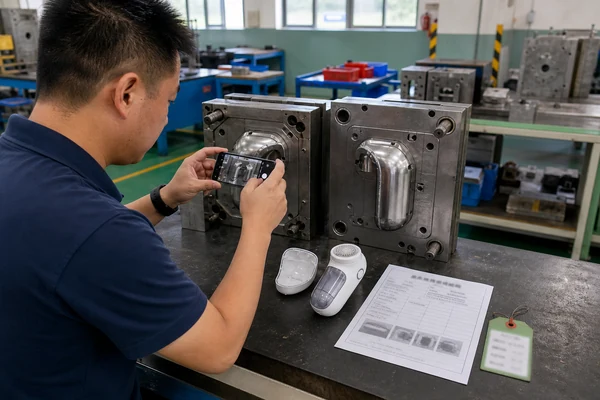
Paying a tooling or design invoice does not automatically answer who owns the result. Name each mould, jig, test programme, CAD file, packaging layout, manual, photograph, and editable artwork file that the buyer expects to own or receive.
For tooling, record the tool number, product, cavity count, material, expected output, price, payer, owner, factory location, maintenance duty, permitted products, and transfer procedure. Request dated photographs and permanent identification after completion. Decide whether the supplier may move the tool, use it for another customer, modify it, retain it after inactivity, or charge a release fee.
Packaging work can create a similar problem. A packaging vendor may produce the structural dieline while a designer supplies artwork and the product factory assembles the final pack. The buyer should know who owns each file, who may edit it, and which source formats must be delivered. The guide to using a product supplier or separate packaging factory explains when these roles are split.
How can registered rights and contracts work together?
Different assets need different tools. A trademark protects the brand; a qualifying technical solution or product appearance may call for patent or design protection. Trade secret measures apply only while the information remains confidential. The contract covers what this supplier agreed to do with the files, tools, and goods.
The systems can overlap. WIPO’s Madrid System allows eligible applicants with a basic national or regional mark to seek protection in designated members. WIPO notes that each designated member’s law determines the protection and that a designation of China does not include Hong Kong or Macao. See the current Madrid System member information.
For product appearance, China has participated in WIPO’s Hague System since May 5, 2022. The system can be a route for eligible overseas designers seeking design protection in China, subject to Chinese requirements and examination. WIPO’s China Hague System notice explains the accession and filing considerations.
Get advice before showing the product at a trade fair, listing it online, launching crowdfunding, or sending complete files to multiple suppliers.
What should you check during production?
Once the order starts, confirm that production uses the approved legal entity, factory, subcontractors, tooling, product version, and artwork. Track revisions so an engineer cannot quietly replace the released file with an earlier drawing.
Add checks that can be verified on the factory floor: product markings, packaging artwork, labels, manuals, tool identification, SKU separation, finished quantity, and leftover branded material. An inspection cannot prove that no unauthorised run occurred. It can expose quantity or artwork discrepancies that deserve a closer look.
Before paying the balance, compare the finished lot with the approved requirements and record the quantity produced, rejected, reworked, packed, and scrapped. The article on inspecting a bulk order before balance payment covers sampling, defect evidence, and reinspection. Add product-specific IP checks to that inspection plan instead of relying on a generic quality checklist.
What should you do if you suspect the supplier copied the design?
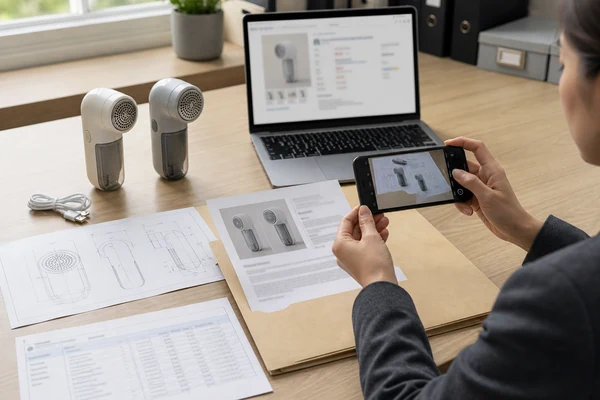
Preserve evidence before confronting the supplier or asking a platform to remove a listing. Save the URL, page source or screenshots, seller identity, listing date, product photos, sales records if visible, file-transfer history, drawings, samples, contracts, invoices, payment records, messages, and your registration documents. Record who collected each item and when.
Then ask qualified IP counsel to identify the right owner, right, territory, target, and remedy. A similar-looking product does not automatically prove infringement, and the best response depends on whether the issue concerns a registered trademark, patent, design, copyright, trade secret, contract, tooling, or branded inventory.
Counsel may recommend a platform complaint, a formal notice, customs recordation, enforcement action, negotiation, or an orderly supplier exit. Do not fire off an improvised threat first. It may reveal your evidence or give the other party time to remove records.
Product design protection checklist before placing an order
- List the brand, technical, visual, creative, confidential, tooling, and data assets in the project.
- Ask qualified counsel which rights and territories should be searched or filed before disclosure.
- Verify the supplier’s Chinese legal entity, production site, business role, and approved subcontractors.
- Create disclosure stages for screening, quotation, sampling, tooling, and production.
- Use a transaction-specific confidentiality and manufacturing agreement.
- Record every recipient, file revision, sample, approval, change, and withdrawal.
- Define ownership and control of moulds, source files, packaging, improvements, overruns, rejects, and scrap.
- Freeze the production package and connect it to the approved sample and inspection plan.
- Check brand, artwork, tooling, quantity, and surplus-material controls during production and inspection.
- Maintain an evidence and response plan for suspicious listings, registrations, or unauthorised production.
Buyers who need China-side supplier communication, sample coordination, tooling photographs, packaging checks, or inspection support can send the product stage and requirements through the Dawon1688 contact page. Legal filings and enforcement should remain with qualified IP professionals.
Final answer
Start before the first sensitive file leaves your company. Decide what needs filing, verify the supplier, and release information only when the current step requires it. Put ownership and permitted use in the manufacturing agreement, then keep the file, tooling, sample, and production records needed to show what actually happened.
Frequently asked questions
1. Should I send a Chinese supplier my complete CAD file before receiving a quotation?
Usually not. A capability and price discussion can often start with a controlled drawing, selected dimensions, material class, functional requirements, and forecast quantity. If the factory cannot quote accurately without the complete CAD file, verify the supplier and settle any filing or contract work before release. Record the exact file version and recipient.
2. Is an NDA enough to stop a factory from copying my product?
No. An NDA can create confidentiality duties, but it may say nothing about subcontracting, competing production, mould ownership, overruns, or source files. Use an agreement written for the transaction, and back it with the relevant filings, controlled access, supplier checks, and records.
3. What is the difference between an NDA and an NNN agreement for China sourcing?
An NDA usually focuses on disclosure. NNN is commercial shorthand for non-disclosure, non-use, and non-circumvention. Do not choose between them by acronym alone. Counsel should check the actual duties, the Chinese legal entity signing them, the governing law, and whether the remedies fit this transaction.
4. What should happen to rejected or surplus units carrying my brand?
The manufacturing agreement should define how the supplier counts, separates, stores, reworks, de-brands, returns, or destroys rejected units, overruns, obsolete packaging, labels, and production scrap. Ask for records that match the agreed method. Include these quantities in the inspection scope when the risk justifies checking them.
5. How can I protect a product when several Chinese suppliers make different components?
Split information by task. Give each supplier the drawings, tolerances, interfaces, and test requirements needed for its component without automatically releasing the full assembly, source files, customer information, or commercial plan. Keep one controlled integration specification, approve subcontractors, use consistent confidentiality duties, and record every disclosure.
6. Should I register my English brand name or a Chinese version in China?
That depends on how customers and suppliers will refer to the brand in China. A trademark professional should search the English mark, logo, proposed Chinese name or transliteration, and the relevant classes before recommending a filing route. Start early: registration in another country does not automatically create Chinese trademark rights.
7. What evidence should I keep if a supplier lists my product online?
Keep dated screenshots, URLs, page source where useful, seller details, product images, listing and sales information, your original files, design history, registrations, samples, contracts, invoices, payments, messages, and disclosure records. Preserve the evidence before contacting the seller, then ask counsel which right and remedy apply in the relevant territory.