The right customization supplier can make your exact specification at your starting quantity, explain the costs and production steps, reproduce an approved sample, and work to measurable quality criteria. Compare several suppliers with the same request, then verify their claims through company records, product-specific evidence, a paid sample, and a controlled pilot order.
For a new brand, the hardest part is rarely finding a company willing to quote. The real task is finding one whose equipment, material supply, order size, communication, and quality controls fit the first production run. This guide applies whether you find the supplier through 1688, a trade show, a referral, or another sourcing channel.
Key takeaways
- Write a product specification before comparing suppliers. If each supplier quotes a different product, the prices mean little.
- Check the legal company, manufacturing capability, and proposed production site separately.
- Use the same RFQ for several suppliers, then compare evidence, total cost, lead time, and problem handling.
- Approve a paid sample and place a controlled pilot order before committing to a large production run.
Start with a specification, not a supplier search
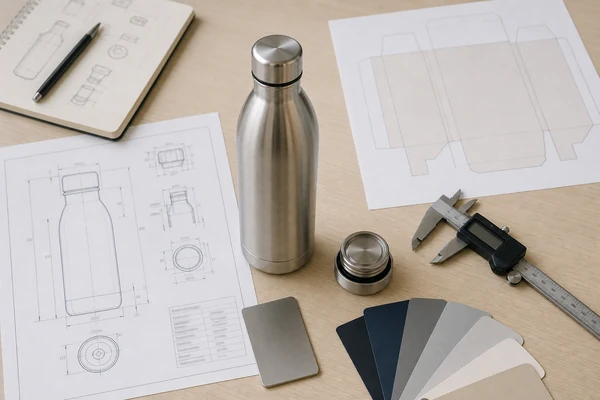
Many sourcing problems begin before the first supplier reply. A buyer sends a product photo and asks, “How much?” One supplier quotes a stock item, another assumes a different material, and a third excludes packaging. The resulting prices are not comparable.
Create a short specification sheet that describes what must remain the same in the sample and in bulk production. It does not need to be a complex engineering document for a simple product. It does need enough detail to remove costly assumptions.
| Requirement | What to state | Why it changes the quote |
|---|---|---|
| Product | Dimensions, material, weight, color, finish, tolerances, and key functions | Similar-looking products may use different components or processes |
| Customization | Logo method, artwork size and position, label, insert, packaging, or structural changes | A printed logo is different from a new mold or custom component |
| Order | Units per model, color, and size, plus expected repeat volume | MOQ may apply to each variant rather than to the whole order |
| Destination | Country of sale, required language, and known compliance needs | Labels, documentation, testing, and packaging rules vary by market |
| Quality | Critical defects, acceptable variation, test method, and inspection point | “Good quality” cannot be measured or enforced |
If you are still identifying products and listings, begin with our guide to finding products on 1688. Supplier selection should begin after the product concept and required customization are clear.
What does the “right supplier” mean for a new brand?
The best supplier for a large retailer may be a poor choice for a first-time order. Large factories can offer capacity and mature systems, yet their material minimums, production schedule, or account priorities may not suit a small launch. A smaller workshop may accept the order but lack stable quality controls or enough backup capacity.
For a new brand, supplier fit usually comes down to five practical questions:
- Can this company make the required product and customization, rather than merely sell something similar?
- Can it handle the starting quantity without changing the agreed material or process?
- Will it document the specification, price breakdown, production time, and remedy for defects?
- Can it provide the records, labels, and traceability your sales market requires?
- Does it communicate clearly enough to surface problems before production?
You are looking for a supplier whose capabilities and incentives fit this order. The cheapest factory, the largest factory, and the most responsive salesperson are not automatically the same company.
What changes when you source suppliers on 1688?
Alibaba Group describes 1688 as a domestic wholesale marketplace in China. It can give an overseas brand access to a broad supplier base, but each order still needs its own specification, company checks, compliance review, quality plan, and delivery arrangement.
Build a shortlist without mistaking popularity for suitability
Use the 1688 listing and store page to form an initial shortlist, not to make the final decision. Product range, company details, transaction history, buyer feedback, response quality, and platform credentials can provide leads for further checking. They should be read together. A single badge or sales number cannot show who will make your order or whether the factory can hold your specification.
A practical starting shortlist is three to five suppliers that appear able to make the same product. That is usually enough to expose differences in MOQ, tooling, sample method, and production assumptions without creating an unmanageable conversation.
Separate the seller from the production site
A 1688 seller may be a manufacturer, a trading company, or a business that combines both roles. None of those labels alone tells you whether the supplier is suitable. What matters is knowing which legal company will contract with you, where the goods will be made, and which processes will be outsourced.
Ask directly: “Which steps are completed at your own facility, and which are subcontracted?” Printing, plating, dyeing, molding, testing, and packaging may take place at different sites. Subcontracting is common and is not automatically a problem. An unexplained or frequently changing production chain is the concern.
Give every supplier the same request
Send the same specification, quantity, destination, and requested terms to each shortlisted supplier. Ask them to identify anything they cannot meet. This produces comparable replies and makes vague answers easier to spot.
Verify the company and its customization capability
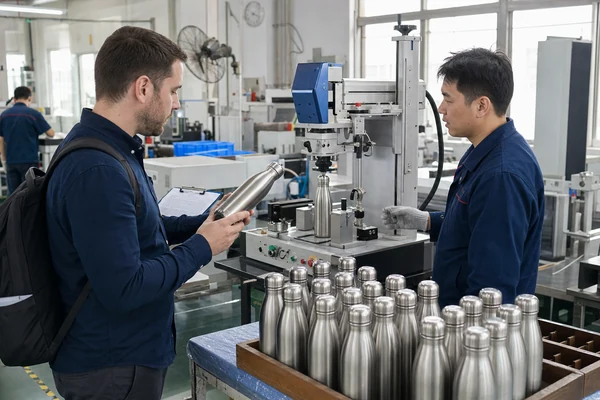
Business registration confirms that a company exists; it does not prove that the company has made your product well. Treat legal verification and manufacturing verification as two separate checks.
Ask for the supplier’s Chinese legal name and Unified Social Credit Code. Search the name or code in China’s National Enterprise Credit Information Publicity System. Compare the registered company name, status, address, and business scope with the license and the party requesting payment. If the store operator, invoice issuer, payee, and factory use different company names, ask for a written explanation of the relationship.
Then test the manufacturing claim with evidence tied to your product:
| Supplier claim | Useful evidence | Question still to answer |
|---|---|---|
| “We are the factory” | Live video from the stated address, production equipment, workshop flow, and staff handling similar goods | Which exact process will this site perform for your order? |
| “We have made this before” | Dated production records, anonymized inspection records, process photos, or samples with similar materials | Was that product made to comparable tolerances and volume? |
| “We can meet your standard” | Relevant test reports that identify the product, model, applicant, standard, laboratory, and date | Does the report actually cover your customized version and sales market? |
| “Quality is guaranteed” | Written checkpoints, test methods, defect limits, records, and corrective-action process | What happens if the inspected batch fails? |
For a broader look at company identity, payment, and platform risk, see our guide to checking whether a 1688 order is safe.
Send an RFQ that exposes hidden assumptions
An RFQ, or request for quotation, should make the supplier quote the same commercial package. Attach your specification and artwork, then request the following in writing:
- Unit price at two or three realistic quantity levels
- MOQ for each product, color, size, logo method, and packaging component
- Sample type, sample cost, revision cost, and sample lead time
- Tooling, mold, printing plate, setup, or artwork fees, including who owns them
- Bulk production lead time measured from final approval and deposit
- Material and component substitutions that require your written approval
- Packaging dimensions, gross weight, and delivery terms to a named location in China
- Inspection access, defect handling, and remake or credit terms
If the customization is limited to a logo, label, or packaging, review the options in our 1688 private-label guide. A stock product with a printed logo has a different cost and risk profile from a product that needs new materials, dimensions, or tooling.
Compare evidence, not sales promises
Place the replies in one comparison sheet. A simple “strong, acceptable, weak, or unresolved” rating is often more useful than a precise score built on incomplete information.
| Area | Strong response | Reason to pause |
|---|---|---|
| Specification | Confirms each requirement and flags a specific limitation | Replies only “no problem” without addressing details |
| Customization | Explains process, equipment, artwork needs, tolerance, and setup | Cannot explain how the logo or custom feature will be produced |
| Pricing | Separates unit, tooling, packaging, sample, and domestic delivery costs | Changes exclusions after you compare quotes |
| Production | Provides milestones and identifies outsourced steps | Promises an unusually short lead time without a production plan |
| Quality control | Accepts written criteria and inspection before shipment | Uses “best quality” in place of measurable checks |
| Problem handling | Discusses revision, delay, and defect remedies before payment | Avoids written responsibility for errors |
A supplier that asks precise questions may be safer than one that accepts every request immediately. Questions about tolerances, artwork format, packaging, test conditions, and use environment show that someone is translating your request into a production process.
Use a paid sample to test the working relationship
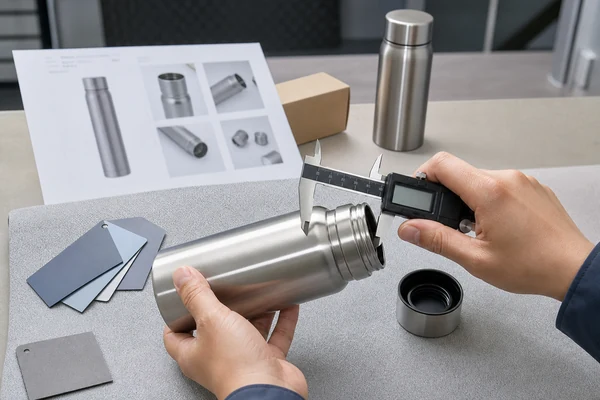
A sample tests more than the item. It shows how the supplier interprets instructions, records changes, communicates delays, and responds when you reject a detail. Pay for the sample when custom work is required; expecting complex development for free can attract unrealistic promises or produce a sample that is not representative.
Before approval, record the sample’s material, dimensions, weight, color reference, logo position, components, functions, packaging, and any agreed tolerances. Photograph it and assign a version number. Both sides should retain an approved reference sample when practical.
One approved sample does not prove that a full batch will match. Bulk materials may come from a different lot, production may use different workers or machines, and rushed packing can introduce new defects. Convert the approved sample into written production criteria, then check the pilot or bulk order against those criteria.
Place a pilot order before scaling
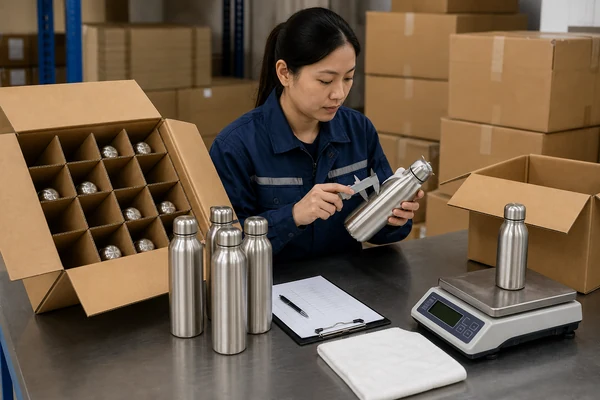
For an untested brand, the first production order should be large enough to exercise the real process but small enough that a defect, delay, or slow-selling product does not threaten the business. The appropriate quantity depends on material minimums, tooling, unit economics, shelf life, and demand. There is no universal “safe MOQ.”
Use the pilot to measure:
- Whether incoming materials and production units match the approved specification
- Actual lead time, including revisions and packing
- Defect patterns and how the supplier investigates them
- Final carton size and weight for transport planning
- Whether sell-through and customer feedback justify a repeat order
If the order will be shipped internationally, include domestic pickup, consolidation, export handling, freight, duties, and local delivery in the budget. Our 1688 shipping guide explains why the supplier’s domestic delivery quote is only one part of the route.
Check compliance before approving customization
A logo can change your legal role. For example, European Commission guidance says that a business having a product made and selling it under its own name or trademark is considered the manufacturer for EU product rules. An EU importer must also verify applicable conformity assessment, technical documentation, labeling, traceability, and instructions before placing the product on the market.
Do not ask a supplier only, “Do you have CE?” First identify the rules for the exact product and destination. Then check whether the supporting documents identify the correct model, applicant, standards, and test scope. A certificate for a visually similar stock item may not cover changed electronics, materials, dimensions, or intended use.
Requirements differ by product and country. Use a qualified testing laboratory or compliance specialist when the product has safety, electrical, chemical, food-contact, children’s-product, medical, or other regulated characteristics. Supplier documents are inputs to the review, not a substitute for it.
Compare total order cost, not the listing price
The lowest unit quote can become the more expensive order after setup charges and quality failures. Compare costs across the same scope:
- Product units and expected overage
- Samples and courier fees
- Molds, tools, print plates, and setup
- Labels, inserts, retail packaging, and master cartons
- Domestic freight to the warehouse or forwarder
- Inspection, testing, and reinspection
- Unused custom materials or components
- Likely defect, delay, and rework exposure
Clarify whether tooling and custom artwork belong to you, how they will be stored, and whether they can be transferred. Also ask what happens to branded packaging or components if you stop ordering. These details are easier to agree before the deposit than after a dispute.
Red flags that should pause the order
Pause and investigate when a supplier:
- Refuses to provide its Chinese legal name or explain a payee mismatch
- Cannot show how the requested customization will be produced
- Sends reports that do not match the company, model, material, or relevant standard
- Changes materials, factories, or key terms without written approval
- Pressures you to make a large payment before the specification is settled
- Will not allow a reasonable pre-shipment inspection
- Quotes far below comparable suppliers but cannot explain the cost difference
- Promises to meet every requirement without asking technical questions
A red flag is a reason to request evidence, narrow the order, or stop. It is not proof of fraud by itself. Record the unresolved issue and make the decision based on its possible impact.
When does a sourcing agent add value?
A buyer can handle supplier selection directly if they can communicate in Chinese, verify companies, compare specifications, coordinate samples, control payments, and arrange inspection and delivery. An agent can be useful when those tasks consume more time or local access than the order justifies.
Define the agent’s scope before engagement. It may include supplier shortlisting, Chinese-language RFQs, registration checks, factory visits, sample consolidation, contract support, production follow-up, inspection coordination, and domestic logistics. Ask how fees are calculated, whether supplier commissions are received, who holds buyer funds, and how evidence will be reported. Dawon1688’s service options and fee structure are available on the pricing page.
Final supplier selection checklist
Before paying for a pilot production order, confirm that you can answer “yes” to each relevant item:
- The specification and artwork version are attached to the order.
- The supplier has accepted the requirements and listed exceptions in writing.
- The legal company, payee, store operator, and production site’s relationships are understood.
- Evidence supports the claimed manufacturing and customization capability.
- MOQ is clear for every model, color, size, material, and packaging component.
- Sample, tooling, unit, packaging, and domestic delivery costs are separated.
- The approved sample and production criteria are recorded.
- Production milestones and the final completion date are defined.
- Applicable compliance documents and labels have been reviewed for the destination market.
- Inspection timing, sampling plan, defect definitions, and acceptance rules are written down.
- Remedies for delay, unauthorized changes, and failed inspection are agreed.
- The pilot quantity and total landed-cost estimate fit the brand’s risk limit.
Conclusion
Finding the right customization supplier is a process of reducing uncertainty. Define the product, compare suppliers against the same RFQ, verify the company and production evidence, approve a controlled sample, and test the relationship with a pilot order. Choose the supplier that makes the important facts visible and repeatable, rather than the one with the fastest reply or lowest first quote.
Frequently asked questions
1. How many suppliers should I compare for one custom product?
Three to five serious candidates is a practical starting range. Fewer may hide meaningful differences in tooling, MOQ, and production method; many more can create repetitive conversations without improving the decision. Remove suppliers that cannot meet a non-negotiable requirement, then compare the remaining candidates with the same RFQ and evidence requests.
2. What should I include in my first RFQ to a customization supplier?
Include the product specification, customization artwork, quantity by variant, destination country, packaging needs, target date, sample request, and quality requirements. Ask for itemized unit, sample, tooling, packaging, and domestic delivery costs. Also request the MOQ for each variable and a list of any requirement the supplier cannot meet.
3. How can I tell whether customization is done in-house or subcontracted?
Ask the supplier to map each production step to a location, then request a live video or visit that follows the relevant equipment, workstations, and current production. Compare the stated site with the business information and shipping origin. Outsourcing can be acceptable, but the supplier should disclose who controls the process and how quality is checked.
4. Should I choose the supplier with the lowest sample price?
No. Compare what the sample includes, whether it uses production-intent materials and processes, how many revisions are allowed, and whether setup charges will be credited later. A cheap stock sample may tell you little about the supplier’s ability to reproduce your customized product in bulk.
5. What evidence shows a supplier has made a similar custom product?
Useful evidence includes anonymized production or inspection records, process photos, retained samples, material records, and a live view of similar work. Check whether the past product used comparable materials, tolerances, customization methods, and volume. A catalog image alone does not establish who manufactured the item.
6. When should I pay for a factory audit instead of relying on video?
Consider an on-site audit when the order value or safety risk is high, custom tooling or intellectual property is important, production claims remain unclear, or a long-term relationship is planned. Video is useful for an early screen, but the supplier controls what the camera shows. An audit can check the stated location, capacity, systems, records, and relevant production processes more systematically.
7. Can I use one approved sample to control future production batches?
Use it as a physical reference, but also convert its important features into measurable specifications, test methods, and defect criteria. Materials and components may change between batches, and a sample cannot represent every unit. Keep the version record current and inspect later lots against both the written standard and the approved sample.
8. What should I do if two shortlisted suppliers use the same factory?
Compare what each seller adds: communication, order terms, quality control, payment handling, problem resolution, and access to the factory. Confirm which company will sign the agreement and receive payment. If the intermediaries add no clear value, ask whether direct factory engagement is possible, while respecting any existing commercial relationships and agreements.