Key takeaways
- A supplier that sells a product is not automatically able to customise it. Ask who performs the branding and request evidence from comparable work.
- Approve the product and the branding as separate items. A clear logo proof does not confirm material, function, dimensions, or packaging quality.
- Keep one approved sample and a written specification. Use both when checking the production batch.
- Your brand does not replace mandatory product information. The destination country’s rules still govern safety labels, importer details, barcodes, warnings, and origin marking.
What does “put my logo on the product” actually include?
The phrase can describe several different jobs. A supplier may quote for a simple one-colour print while the buyer expects a custom product, retail box, barcode, and instruction manual. Those are separate deliverables.
| Customisation level | Typical work | What the buyer must approve |
|---|---|---|
| Logo on a stock product | Screen printing, pad printing, laser engraving, embroidery, heat transfer, sticker, or woven label | Method, size, position, colour, durability, and appearance on the actual material |
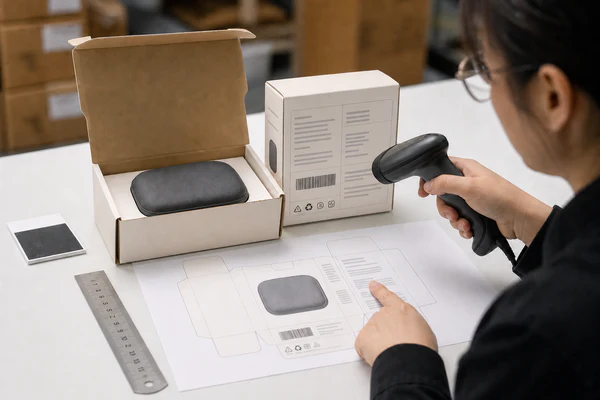
| Branded retail packaging | Printed box, bag, sleeve, insert card, manual, barcode label, or carton mark | Dieline, artwork, material, dimensions, finish, required text, and packed-product fit |
| Modified stock product | New colour, accessory set, fabric, component, size, or surface finish | Complete product specification and a sample made from production-intent materials |
| New or substantially changed product | New mould, pattern, circuit, formula, tooling, or construction | Drawings, tolerances, testing, ownership, revision control, and production validation |
Start by deciding which row describes your order. If you only want a logo on an existing product, say so. If the colour, materials, dimensions, accessories, or performance must change, treat it as product development rather than a printing job.
Can every 1688 supplier make private-label products?
No. Alibaba Group describes 1688.com as a domestic wholesale marketplace that brings together suppliers from many industries. A listing may belong to a factory, a trading company, a wholesaler, or a seller that outsources custom work. The listing alone does not establish who will manufacture, print, pack, or inspect your order.
Ask who performs each part of the job
Ask the seller whether the product, logo application, and packaging are made in one facility or by separate subcontractors. Outsourcing is not automatically a problem. It does mean that lead times, colour control, minimum quantities, and responsibility for defects may be divided between several businesses.
Request evidence that matches your order
Useful evidence includes current photographs or short videos of the proposed printing method, a blank product made from the same material, a packaging sample using the same board and finish, and a quotation that names the custom work. A gallery of unrelated branded products is weak evidence. If the order value or tooling cost is substantial, verify the supplier before sending a deposit; the Dawon1688 supplier verification guide explains the difference between platform legitimacy and supplier suitability.
How to place a custom-logo order on 1688
1. Freeze the product before discussing decoration
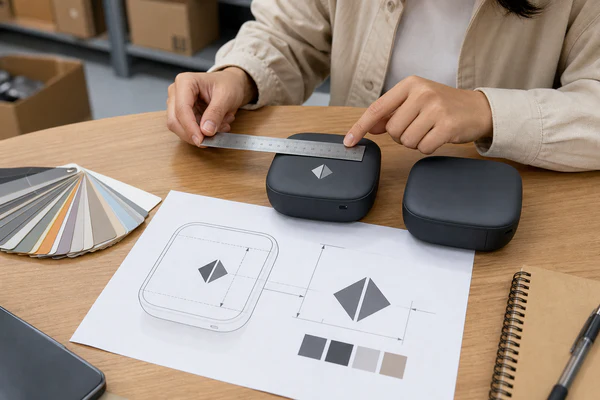
Record the model, material, dimensions, colour, components, accessories, performance requirements, packaging method, and acceptable tolerances. Use the supplier’s item code and your own revision number. If two similar listings use different materials, a logo mock-up will not resolve the difference.
2. Send usable artwork and placement instructions
Provide an editable vector file such as AI, EPS, SVG, or print-ready PDF when the process supports it. Include the required width and height, the distance from a fixed product edge, and a colour reference. A screenshot can help show placement, but it is usually a poor production file because enlarging it may expose jagged edges or a background that was meant to be transparent.
3. Request an itemised quotation
Ask the supplier to separate the product price, logo setup charge, per-unit branding charge, sample charge, mould or printing-plate cost, packaging unit price, packing labour, and domestic delivery. Confirm which charges apply again on a repeat order. The listed price on 1688 often refers to the unbranded product, so do not use it as the final private-label cost.
4. Approve a digital proof, then a physical sample
A digital proof should show the artwork, position, size, and orientation. It catches obvious layout errors. It cannot show whether ink adheres to a textured surface, whether embroidery distorts a small letter, or whether a printed box scuffs during packing. Approve a physical sample before bulk production when the branding, finish, colour, or packed appearance matters.
5. Convert the approved sample into a written production specification
Photograph the approved sample, sign or mark it, and record its revision date. Attach the artwork files, colour references, measurements, packaging dieline, barcode data, required warnings, and defect criteria to the purchase record. State that substitutions require written approval. This gives the supplier, inspector, and buyer the same reference.
6. Inspect before international shipping
Check the product, branding, and packaging against the approved sample and specification while the goods are still in China. For larger batches, the inspection plan may use a defined sampling method. ISO 2859-1:2026 describes acceptance sampling plans indexed by an acceptance quality limit (AQL). Sampling reduces inspection effort but does not guarantee that every unit is defect-free, so critical safety or functional checks may require a different plan.
What affects MOQ and private-label cost?
There is no platform-wide private-label MOQ. The constraint often comes from the custom process rather than the base product. A supplier may sell a few unbranded units but require more pieces for a printed box because the packaging factory has its own production minimum.
| Cost or constraint | Why it changes | Question to ask |
|---|---|---|
| Logo setup | The process may require a screen, plate, embroidery file, laser fixture, or programme | Is this a one-time charge, and can the setup be reused? |
| Branding MOQ | Machine setup and material waste make very small runs inefficient | Can you brand a smaller trial batch, and at what unit cost? |
| Packaging MOQ | Boxes, bags, manuals, and labels may come from different converters | Can unused packaging be stored, returned, or used for the next order? |
| Colour matching | Ink, substrate, coating, lighting, and production method affect appearance | Will you provide a printed colour sample on the actual material? |
| Tooling | A new shape or component may require a mould, die, jig, or cutting tool | Who owns, stores, maintains, and may use the tooling? |
| Inspection and rework | More checkpoints, tests, and defect sorting require time | Which defects trigger rework, replacement, or rejection? |
When comparing suppliers, compare the same specification and the same order quantity. A lower unit price may exclude the sample, setup, packaging, inspection, or repacking required for a saleable product. Dawon1688’s pricing page separates purchasing, inspection, warehousing, and repackaging services; supplier customisation charges still need a product-specific quotation.
How do you keep the bulk order consistent with the sample?
An approved sample gives the factory a reference, but it does not control every variable in bulk production. The production run may use a different material batch, operator, machine setting, packaging run, or subcontractor. Define the features that must match and how the inspector will check them.
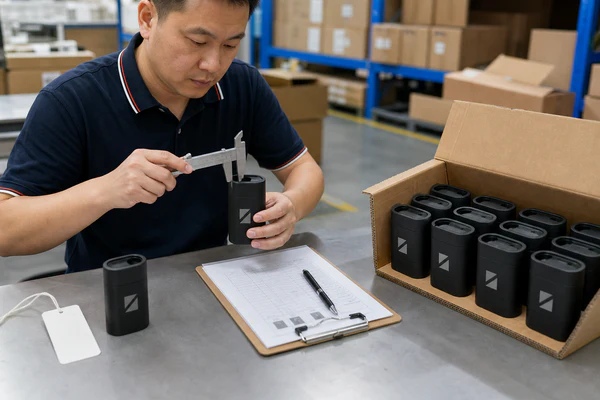
- Keep a sealed or signed approval sample with the buyer or inspection team in China.
- List measurable requirements instead of relying on words such as “premium,” “strong,” or “same as sample.”
- Define major logo defects: wrong artwork, wrong position, unreadable text, poor adhesion, embroidery damage, visible scratches, or colour outside the approved range.
- Inspect the product after it has been packed. Confirm fit, protection, accessories, manuals, and carton markings.
- Record any approved change with a new revision number. Do not let chat messages create several competing versions of the order.
If production is split across suppliers, send the goods to one China warehouse for comparison, labelling, and packing. The 1688 shipping guide explains how domestic receiving, consolidation, and international transport fit together.
What must appear on private-label products and packaging?
Your logo is only one part of the label. Required information depends on the product and the country where it will be sold. Confirm the rules before the supplier prints thousands of boxes.
Clear the brand before printing it
Check whether the name or logo conflicts with earlier rights in the markets where you plan to sell. For the United States, the USPTO recommends a trademark clearance search and notes that word marks and design elements may both create conflicts. A database search is one part of clearance, not a legal opinion or a guarantee of registration.
Use barcodes assigned to the correct brand owner
Do not copy a barcode from a supplier’s generic product and place it on your version. GS1 states that the brand owner is normally responsible for assigning the GTIN, regardless of where or by whom the item is manufactured. Confirm whether a change to the product, pack count, or primary brand requires a different GTIN.
Check origin, importer, safety, and language requirements
For goods imported into the United States, country-of-origin marking is governed by product-specific facts and exceptions, but U.S. Customs and Border Protection generally requires foreign articles or their containers to identify the country of origin conspicuously and legibly. For the EU, official product-compliance guidance says manufacturers and importers must identify applicable requirements, labels, traceability information, instructions, and safety information. The importer must verify compliance rather than assume the factory’s standard label is sufficient.
Do not place CE, FCC, recycling, food-contact, or other compliance marks on artwork simply because a competitor uses them. Confirm whether the mark applies to the product and retain the supporting technical records. Some products require warnings, responsible-person details, batch identification, or instructions in the destination market’s language.
Who owns the artwork, moulds, and printing plates?
Payment does not answer every ownership question. Put the terms in writing before tooling or packaging production starts. The agreement should identify who owns the logo files, dielines, drawings, moulds, dies, screens, printing plates, and unused packaging. It should also state where those items will be stored, how long they will be retained, who pays maintenance or storage, and whether the supplier may use them for another customer.
For a simple printed logo, the setup may have little reuse value. A product mould or complex packaging die can be more important. Record an asset number, photograph the tooling where practical, and specify what happens if you change suppliers. For a high-value design or market launch, obtain advice for the jurisdictions and contracts involved rather than relying on a short marketplace chat.
What can a 1688 buying agent handle?
A China-based purchasing agent can translate the specification, compare supplier quotations, collect samples, coordinate revisions, pay suppliers in RMB, receive goods, and arrange inspection, labelling, repacking, consolidation, and export shipping. This is useful when the product supplier, printer, packaging factory, and freight forwarder are separate businesses.
An agent cannot choose your trademark, decide the laws in your destination country, or guarantee that a sampled batch contains no defects. The buyer still needs to approve the product, artwork, budget, inspection scope, and compliance plan. If you want Dawon1688 to review a product link and customisation request, send the intended market, quantity, artwork status, and required packaging through the contact page.
Checklist before paying for a custom-logo order
- Exact 1688 product link, supplier item code, and product revision
- Material, dimensions, colour, components, performance, and tolerances
- Logo file, physical size, position, orientation, colour reference, and application method
- Packaging dieline, material, finish, required text, barcode data, and carton marks
- Applicable country-of-origin, importer, warning, language, and compliance information
- Sample price, sample lead time, revision allowance, and approval method
- Product MOQ, branding MOQ, packaging MOQ, and quantities by colour or size
- Setup, tooling, unit, packing, inspection, storage, and domestic delivery charges
- Ownership and permitted use of artwork, tooling, printing plates, and surplus packaging
- Bulk lead time measured from final sample and artwork approval
- Inspection criteria, sample plan, defect categories, and remedy for rejected goods
- Payment stages and the written conditions for starting bulk production
When should you pause the order?
Pause if the supplier will not identify the base product, refuses to put custom details in the quotation, or starts bulk production before written sample approval. Other warning signs include a request to print compliance marks without supporting documents, an unexplained material substitution, a barcode owned by another brand, or artwork that hides mandatory origin or safety information.
A delay before production is inconvenient. A full batch with the wrong logo, unreadable warnings, or packaging that does not fit is much harder to correct.
Can 1688 suppliers put your logo on products?
Some can, but the useful question is whether a particular supplier can reproduce your approved product and branding consistently at the required quantity. Confirm the process, approve a physical sample, fix the specification, check legal labels, and inspect the finished batch before it leaves China.
Frequently asked questions
1. What artwork files should I send for logo printing?
Send an editable vector file such as AI, EPS, SVG, or print-ready PDF, plus a visual reference showing placement. Include the final logo dimensions, orientation, colour reference, and any clear-space rule. Ask the supplier which format its printing or embroidery equipment requires. Keep the original file and approve the supplier’s converted production file before sampling.
2. How do I control logo colour when the supplier uses a different printing process?
Give the supplier a recognised colour reference and ask for a physical strike-off or branded sample on the real product material. Screen colour is not enough because substrate, ink, coating, heat, and lighting change the result. Define an acceptable range where exact matching is impractical, then compare the bulk batch under consistent lighting.
3. Who should create the barcode for a private-label product?
The brand owner is normally responsible for assigning the product’s GTIN through GS1. The supplier may print the barcode, but it should print the number and artwork supplied or approved by the brand owner. Verify the encoded number, print contrast, quiet zones, dimensions, and scan performance before approving the retail packaging.
4. Do I need to mark “Made in China” on custom-branded goods?
Many destination markets have country-of-origin rules, but the required wording, location, permanence, and exceptions depend on the product and country. A logo from an overseas brand does not change where the goods were manufactured. Confirm the applicable customs and labelling rules before printing, and check both the product and its retail packaging during inspection.
5. Who owns a custom mould or printing plate after I pay for it?
The written agreement should define ownership; the setup payment alone does not settle it. State whether the buyer owns the asset, whether the supplier may use it for other customers, where it will be stored, and how it can be transferred or destroyed. Record the asset with photographs or an identification number when its value justifies the effort.
6. Can unused custom packaging be stored for my next order?
Often it can, if the supplier or agent has space and agrees to the quantity, storage period, charges, and damage risk. Count the surplus after packing and record who owns it. Printed packaging can become obsolete when a barcode, address, warning, product specification, or regulation changes, so review the artwork again before reusing old stock.
7. What should an inspection check on private-label packaging?
Check the approved artwork revision, spelling, logo position, colour, barcode data and scanning, mandatory labels, pack quantity, accessories, manuals, box construction, finish, product fit, and shipping-carton marks. The inspector should compare the packed product with the approved sample and specification, not with a generic photo from the 1688 listing.