
Key takeaways
- 1688 is a Chinese domestic wholesale marketplace, so international transport is normally a separate arrangement rather than a standard feature of the product listing.
- The best shipping method depends on the packed size, actual weight, product restrictions, destination, deadline, and value of the goods.
- Shipping cost should be compared on the same scope: pickup point, destination, service level, customs terms, surcharges, and final delivery.
- Do not book freight until the warehouse has confirmed the carton count, packed dimensions, gross weight, product description, and any batteries, liquids, magnets, powders, or other controlled contents.
What does 1688 shipping include?
Alibaba Group describes 1688.com as China’s leading integrated domestic wholesale marketplace. That domestic focus shapes the logistics. A supplier may deliver to a Chinese address, but an overseas buyer usually needs a separate party to receive the order in China and arrange the export shipment.
“1688 shipping” is a convenient name for these connected services. There is no universal platform service or price.
Supplier delivery inside China
The first leg runs from the 1688 supplier to a receiving address in China. Before ordering, confirm whether domestic freight is included, charged at checkout, quoted after packing, or payable on delivery. Ask the supplier to place the 1688 order number or your warehouse reference on every carton. Without a usable reference, a warehouse can receive a box but struggle to match it to the correct buyer.
Warehouse receiving and shipment preparation
The warehouse records the incoming cartons and checks them against the order. Depending on the agreed service, it may count units, inspect selected products, photograph the goods, remove unnecessary retail packaging, reinforce cartons, apply shipping marks, or combine orders. Inspection has limits: a basic appearance check does not prove product performance or regulatory compliance.
Export and international transport
Once the packed shipment data is final, a freight forwarder can compare suitable routes and book the main transport. The booking may be door-to-door, airport-to-airport, port-to-port, or another defined scope. These options cannot be compared by price alone because the pickup, terminal handling, customs work, and final delivery included in each quote may differ.
Import clearance and final delivery
The destination country’s rules determine the commodity classification, declarations, taxes, permits, and product requirements. The buyer should know who will act as importer of record and who will submit the declaration before the shipment leaves China. Paying a freight invoice does not transfer the buyer’s legal import responsibilities unless a valid service agreement says so.
How does the international shipping process work?
- Confirm the product before purchase. Record the material, use, model, quantity, unit value, battery specification, brand status, and destination-country compliance requirements.
- Choose a China receiving address. Give every supplier the correct warehouse address, recipient code, phone number, and carton-marking instructions.
- Track domestic deliveries. Keep the supplier name, 1688 order number, domestic tracking number, expected quantity, and warehouse reference together.
- Receive and check the goods. Reconcile missing, extra, damaged, or incorrect items while the products are still in China and returns are more practical.
- Finalize export packing. Confirm the number of cartons, dimensions, gross and net weight, packing materials, shipping marks, and pallet requirements.
- Compare freight quotes on the same basis. Check the mode, route, service scope, chargeable weight, validity date, customs term, insurance, surcharges, and exclusions.
- Approve documents and dispatch. Review the commercial invoice, packing list, transport document instructions, consignee details, product description, declared value, and commodity code with the responsible broker or forwarder.
- Clear customs and receive the shipment. Respond promptly to document requests, pay applicable duties and taxes, and check the cartons before signing a clean delivery receipt.
This process begins before the order is shipped. Product compliance, packing, and importer arrangements are difficult and expensive to correct after the cargo reaches a port or airport. Buyers who are still arranging supplier settlement can use the separate 1688 payment guide to compare available payment routes.
Which shipping method is suitable for a 1688 order?
Transit time and cost vary by route, season, carrier capacity, service level, customs processing, and final address. Use the following table as a decision framework, not a fixed delivery promise.
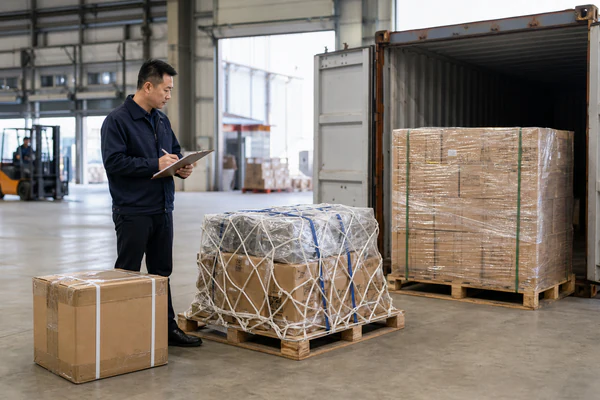
| Method | Usually fits | Main advantages | Main limits to check |
|---|---|---|---|
| Express courier | Samples, small cartons, urgent replacement parts, or higher-value goods | Fast booking, detailed tracking, and door delivery in many destinations | Dimensional weight, remote-area fees, address corrections, and restricted contents |
| Air freight | Time-sensitive commercial cargo that is too large for economical courier service | Faster than ocean freight and available with airport or door services | Higher freight cost, airport handling, chargeable weight, and dangerous-goods rules |
| Rail freight | Eligible cargo moving on supported China-Europe and regional corridors | A possible middle ground between air speed and ocean cost on certain lanes | Limited destinations, route changes, border transfers, and product restrictions |
| Ocean LCL | Cargo that does not fill a container and can tolerate a longer schedule | Access to ocean transport without paying for a full container | Origin and destination handling, consolidation time, minimum charges, and more cargo handling |
| Ocean FCL | Larger orders or cargo that benefits from a dedicated container | Less co-loading and potentially lower unit freight cost at sufficient volume | Container utilization, port charges, demurrage, detention, unloading, and inland delivery |
UPS describes air freight as a faster, higher-cost option commonly used for time-sensitive, high-value, or lightweight goods. DHL’s air-versus-ocean guidance also recommends comparing the actual route and schedule rather than relying on a general rule. For ocean cargo, LCL and FCL should be quoted separately when both are plausible.
How are 1688 shipping costs calculated?
A product’s international freight cost cannot be calculated reliably from its 1688 listing price. The listing may show a unit price and Chinese domestic delivery, while the export shipment is charged after the goods have been packed and measured.
Cost components to request in writing
- supplier-to-warehouse domestic freight;
- warehouse receiving, inspection, storage, packing, labeling, or consolidation;
- export pickup and origin handling;
- international freight and current carrier surcharges;
- insurance, if requested;
- destination terminal, broker, clearance, and delivery fees;
- import duty, tax, or other government charges; and
- possible extra charges for remote areas, oversized pieces, dangerous goods, port storage, demurrage, detention, or failed delivery.
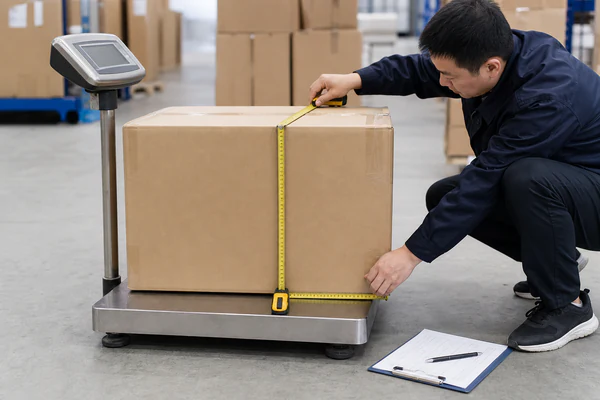
Actual weight and chargeable weight
Courier and air services may charge the greater of actual weight and dimensional or volumetric weight. For example, DHL explains a common express formula as:
Volumetric weight in kg = length in cm x width in cm x height in cm / 5,000
A 50 x 40 x 30 cm carton has a volumetric weight of 12 kg under that formula. If the carton actually weighs 7 kg, the service may charge 12 kg. The divisor is not universal; it can change by carrier, product, route, and freight mode. Use the divisor written in the quote. DHL’s weight and dimensions guide explains why the greater weight is used.
Landed cost matters more than the freight headline
For purchasing decisions, compare the estimated landed cost:
Product cost + China domestic freight + purchasing and warehouse services + export packing + international freight + insurance + destination charges + duty and tax + final delivery
A low international freight line can still produce an expensive shipment if destination handling and delivery are excluded. Ask for a list of included and excluded charges, not only a total.
Where does shipment consolidation fit?
Consolidation happens between domestic receiving and international dispatch. A warehouse waits for selected supplier orders, checks their references, and repacks them into a planned export shipment. This can reduce repeated minimum charges and unused carton space, but it can also add waiting time, storage, handling, and coordination.
Do not combine products automatically. Goods with batteries, liquids, magnets, food ingredients, cosmetics, wood packaging, or conflicting customs requirements may need separate routes or documents. High-value and urgent cartons may also be better shipped independently.
For the detailed decision process, read Dawon1688’s shipment consolidation guide. That guide focuses on whether and how to combine supplier orders; this article focuses on selecting and controlling the entire international shipping route.
What customs documents should be prepared?
Exact requirements depend on the destination, product, value, origin, and chosen customs procedure. The following records are common starting points, but the importer or customs broker should confirm the final set.

| Document or data | What it should identify | Common error to avoid |
|---|---|---|
| Commercial invoice | Seller, buyer, product, quantity, unit and total value, currency, origin, and transaction terms | Vague descriptions such as “accessories” or values that do not match the transaction |
| Packing list | Carton count, contents by carton, marks, dimensions, and net and gross weight | Totals that conflict with the invoice or the physical cargo |
| Transport document | Shipper, consignee, notify party, route, packages, weight, and freight instructions | Incorrect consignee name or release instructions |
| Commodity classification | A code supported by the product’s material, function, construction, and use | Choosing a code solely because it has a lower duty rate |
| Licences, test reports, or certificates | The specific product, model, manufacturer, market, and applicable rule | Assuming a supplier’s unrelated certificate covers the imported product |
| Origin and value evidence | Where the goods were made and what was paid or payable | Confusing the shipping country with the product’s country of origin |
The U.S. Department of Commerce’s common export documents guide explains the roles of the commercial invoice, packing list, and transport documents. Destination authorities remain decisive. For example, the UK Trade Tariff and the European Commission’s TARIC database link commodity classification to duties and other import measures.
Also state the agreed delivery term and named place precisely. The International Chamber of Commerce explains that the Incoterms® 2020 rules allocate costs, risks, and obligations between buyer and seller. They do not replace the sales contract, product compliance work, or a clear freight scope.
Which products need special shipping checks?
Tell the forwarder exactly what the goods contain before requesting a final booking. A general product name or photo is not enough. Common examples requiring extra review include:
- lithium, sodium-ion, lead-acid, or other batteries;
- power banks, wireless products, and devices packed with batteries;
- liquids, gels, aerosols, perfumes, cosmetics, adhesives, and paints;
- magnets, motors, speakers, and other products with magnetic fields;
- powders, chemicals, cleaning products, and unknown formulations;
- food, plants, seeds, animal products, medical items, and products making health claims;
- branded goods or products that may involve trademarks, patents, or design rights; and
- wooden pallets or crates that may require compliant treatment and marking.
Restrictions are specific to the product configuration and route. They do not always mean the item cannot ship; they may change the carrier, packaging, declaration, testing, documents, or price. For air cargo, IATA’s battery guidance explains that battery transport requirements depend on matters such as battery type, configuration, and rating. Never hide or misdescribe a restricted item to obtain a cheaper booking.
How should you choose a shipping route?
Start with the business constraint that would hurt most if it were missed.
| Main constraint | Route to compare first | What to verify before choosing |
|---|---|---|
| A sample or urgent small order | Express courier, then air freight | Dimensional weight, restricted contents, remote delivery, and customs scope |
| A time-sensitive commercial order | Air freight and faster multimodal options | Production readiness, airport handling, cutoff dates, and door delivery |
| Heavy or bulky non-urgent goods | Ocean LCL and FCL | Total cubic volume, minimum charges, destination fees, and unloading capability |
| Several supplier orders | Warehouse consolidation followed by the suitable main mode | Latest supplier arrival, compatibility of goods, storage, and repacking plan |
| Stock needed in stages | Split shipment using two modes | Which units are urgent, duplicate handling costs, and inventory priority |
Split shipping is often worth pricing when a delayed order would stop sales or production. A small urgent portion can move by air while the balance moves by ocean. The extra handling must be compared with the cost of waiting for the entire order.
1688 shipping quote checklist
Send the same information to each provider so the quotes are comparable:
- China pickup address or warehouse location;
- destination postcode and whether the address is residential, commercial, port, or fulfillment center;
- number of cartons or pallets;
- packed length, width, height, and gross weight for every piece;
- clear product name, material, function, unit count, and declared value;
- battery type and rating, liquids, magnets, powders, wood packaging, or other special contents;
- requested pickup date and required delivery window;
- preferred service scope, such as door-to-door or port-to-port;
- who will act as importer of record and customs broker;
- requested insurance basis and insured value;
- included origin, destination, clearance, and delivery charges;
- excluded duties, taxes, surcharges, storage, demurrage, detention, and inspection fees;
- quote validity and conditions that permit repricing; and
- claim limits, evidence requirements, and reporting deadlines.
If your goods have not reached the warehouse, treat the first quote as an estimate. Ask for a final packed measurement and charge review before authorizing dispatch.
How can Dawon1688 help with international shipping?
Dawon1688 can coordinate the steps in China: receiving goods from 1688 suppliers, matching cartons to orders, arranging agreed inspections, repacking, labeling, consolidation, and obtaining international freight options. Buyers can review the published service fee structure and request an order-specific quotation through the contact page.
The buyer should still provide accurate product information and confirm destination-country requirements. A purchasing agent or freight forwarder can coordinate logistics, but cannot make a non-compliant product compliant by changing the description on a shipping document.
Conclusion: control every shipping stage
1688 shipping works best when the domestic delivery, China warehouse, export booking, customs clearance, and final delivery are planned as one route. Confirm the packed shipment data, compare quotes on identical terms, declare restricted contents, and settle the importer and document responsibilities before dispatch.
Frequently asked questions
1. When should I request a door-to-door quote instead of port-to-port?
Request door-to-door pricing when you want one quote to include the main transport and inland delivery to a named address. It can be easier to budget, but you still need to check whether import clearance, duty, tax, unloading, appointment fees, and remote-area charges are included. Port-to-port may suit an experienced importer with its own broker, transport contracts, and destination handling arrangements.
2. Why did the final shipping charge change after my goods reached the China warehouse?
An early quote may use supplier estimates rather than final packed data. The price can change after the warehouse confirms the carton dimensions, gross weight, number of pieces, restricted contents, destination postcode, or required service. Carrier rates and surcharges can also expire. Ask the provider to identify the exact measurement or rate condition behind the revision before approving it.
3. Can I use different shipping methods for different cartons in the same 1688 order?
Yes. A buyer can send urgent units by express or air and move the remaining stock by rail or ocean if the products and routes are eligible. Each split creates separate packing, documents, minimum charges, tracking, and customs entries, so compare the extra logistics cost with the business cost of waiting for one shipment.
4. Who should be the importer of record for a commercial 1688 shipment?
The importer of record should be a person or entity legally able to import the goods in the destination and accept responsibility for the declaration, classification, value, permits, duties, taxes, and records. The exact eligibility rules vary by country. Confirm the importer with a licensed customs broker or the destination customs authority before the cargo leaves China.
5. Should I buy cargo insurance for an international 1688 shipment?
Consider insurance when loss or damage would create a material financial problem. Check the insured value, covered risks, exclusions, deductible, geographic scope, packing requirements, claim deadline, and evidence needed. Carrier liability and cargo insurance are not the same, and neither automatically covers poor product quality or a supplier sending the wrong goods.
6. Can I change the shipping method after the goods arrive at the warehouse?
Usually, provided the cargo has not been booked or handed to the carrier. A route change may require new packing, labels, dangerous-goods checks, documents, or warehouse handling. Once a booking is confirmed, cancellation or amendment fees may apply. Make the decision after receiving final measurements but before the dispatch authorization.
7. What is the difference between customs clearance and final delivery?
Customs clearance is the process of declaring the goods, supplying supporting records, completing any inspection, and paying or accounting for applicable government charges. Final delivery is the physical movement from the airport, port, rail terminal, or local depot to the consignee’s address. A quote can include one, both, or neither, so the service scope should name them separately.