
Key takeaways
- Book the inspection early enough to leave time for rework and reinspection, but carry it out only when the agreed production lot and final packaging are ready to check.
- Give the inspector controlled documents and measurable acceptance criteria. A request to check for “good quality” is not an inspection plan.
- Sampling reduces the number of units examined. It does not prove that every item in the shipment is defect-free.
- Read the complete report before paying. A pass result is useful only when the correct product, lot, tests, packaging, and defect limits were covered.
When should a bulk order be inspected?
A pre-shipment inspection should take place after the units covered by the order are finished and enough final packaging is available to examine. The supplier should confirm the quantity produced, the quantity packed, the factory address, and the date on which the complete lot will be ready.
Do not choose the inspection date from the supplier’s original production estimate alone. Ask for a written readiness confirmation shortly before the visit. If production is incomplete, the inspector may see only selected units, temporary packaging, or cartons from one part of the order. That evidence cannot describe a lot that does not yet exist.
Leave a practical correction window between inspection and the planned shipment. The required time depends on the defect, production process, replacement materials, and factory capacity. Moving the inspection to the day before container loading may leave the buyer with only two choices: accept unresolved problems or miss the shipment.
Payment timing must follow the purchase contract. The useful control point is to require the agreed inspection evidence before authorizing the balance or release of the goods. This is separate from checking payment details, which is covered in Dawon1688’s guide to paying suppliers on 1688.
What should you send to the inspector before the visit?
The inspector cannot reconstruct the order from a listing page and a few chat messages. Prepare one controlled inspection pack. It should identify the exact purchase order, product version, quantity, factory, and documents that apply.
| Inspection input | What it should contain | Why it matters |
|---|---|---|
| Purchase order | Supplier, factory, SKU, colour and size breakdown, quantity, unit packaging, and delivery terms | Confirms which commercial order is being checked |
| Product specification | Materials, components, dimensions, tolerances, finish, performance, included accessories, and revision number | Turns the buyer’s expectations into testable requirements |
| Approved reference | Identified sample, dated photographs, drawings, colour references, and approved deviations | Shows the agreed product appearance and construction |
| Test instructions | Equipment, method, number of units, duration or cycles, and pass criteria | Allows another person to repeat the test consistently |
| Defect criteria | Product-specific examples classified by severity, with acceptance or rejection rules | Prevents the report from relying on the inspector’s personal opinion |
| Packaging files | Artwork, labels, barcode data, warnings, manual, packout, carton marks, and approved packaging sample | Checks the complete sellable unit and shipping cartons |
The approved sample should already be linked to a controlled specification. If that step is incomplete, use the product sample approval checklist before asking an inspector to compare the bulk goods with it.
What should a pre-shipment inspection check?
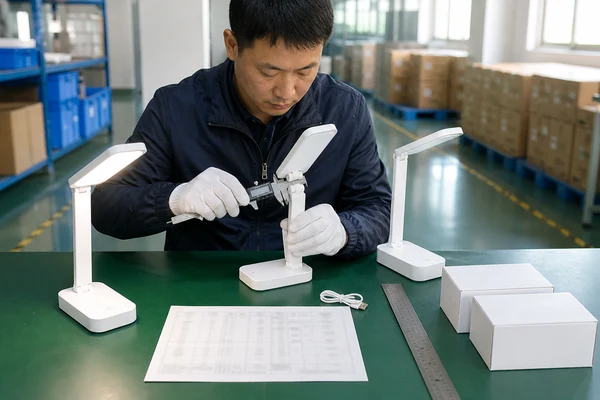
The checklist must match the product. A textile order, electrical appliance, moulded plastic part, and cosmetic package need different tests. The following areas form a starting point, not a substitute for product-specific requirements.
Order identity and available quantity
Confirm the supplier, factory, purchase order, model, SKU, colour, size, and production quantity. Record how many units and cartons were finished, packed, unpacked, or unavailable. Photograph carton stacks and shipping marks so the report can be traced to the inspected lot.
A correct product taken from a different production run does not prove the current order is correct. If goods are stored in several rooms or buildings, the inspector should know where the complete lot is located before selecting samples.
Workmanship and appearance
Look for the failure modes defined for the product: scratches, stains, gaps, sharp edges, poor seams, loose parts, print errors, colour variation, adhesive residue, contamination, or incomplete assembly. Use defect photographs or limit samples when a boundary is difficult to describe in words.
Inspect all sides and the areas hidden during normal display. Cosmetic checks should use suitable lighting and an agreed viewing distance where appearance is subjective.
Dimensions, materials, and components
Measure critical dimensions with appropriate equipment and record the actual values. Check weight, thickness, capacity, component model, fabric weight, coating, or material declaration where these characteristics affect function or cost.
A visual inspection cannot confirm every material claim. Composition, chemical restrictions, electrical safety, food-contact suitability, and other regulated properties may require documents or laboratory testing that was arranged before the finished-goods inspection.
Function and assembly
Use the product as the customer will use it. Assemble parts, connect accessories, operate controls, load the product, open and close moving parts, or run the specified electrical checks. Define the test duration, load, sequence, and expected result in advance.
Trying one unit once is not a reliable test plan. The report should state how many units were tested, which method was used, and whether every tested unit passed.
Branding, labels, and retail packaging
Compare the logo, artwork, colour, position, warnings, barcode, manual, and included accessories with the approved files. Scan barcodes where possible. Open packed units rather than judging the box from the outside.
Check the product fit, protective materials, sealing method, quantity per inner and master carton, carton dimensions, gross weight, and shipping marks. Incorrect packaging can damage acceptable products or create extra freight and fulfilment costs.
How do sampling and AQL affect the result?

Many finished-goods inspections examine a sample drawn from the production lot rather than every unit. ISO 2859-1:2026 defines AQL-indexed sampling schemes for lot-by-lot inspection by attributes. The ANSI/ASQ Z1.4 standard also provides normal, tightened, and reduced sampling plans for attribute inspection.
A sampling plan connects the lot size, inspection level, sample size, defect classification, and acceptance or nonacceptance threshold. The buyer and inspection provider should agree on these settings before the visit. Copying an AQL value from another product can give the wrong level of control because product risk and customer tolerance differ.
AQL does not mean that the buyer agrees to receive a stated percentage of defects. It is a statistical decision rule for the inspected lot. A passing sample can coexist with defects elsewhere in the shipment, and a failed sample does not reveal the exact defect rate across every unit.
Use 100% inspection when the contract or risk justifies checking every unit for a defined characteristic. Even then, inspector fatigue, test limitations, inaccessible internal features, and destructive tests prevent a claim of absolute certainty. High-risk characteristics may need process controls, laboratory testing, specialised equipment, or a product-specific compliance programme in addition to final inspection.
Which type of quality check should you choose?
| Check type | Best used for | Main limitation |
|---|---|---|
| Supplier self-check | Routine production records, measurements, and early correction before an external visit | The supplier is reporting on its own goods, and the buyer may not control sample selection |
| Sourcing agent or warehouse check | Receiving checks, identity, quantity, visible condition, photos, consolidation, and simple agreed tests | The scope depends on available equipment, access, staff training, and whether the goods have already left the factory |
| Independent factory inspection | Structured sampling from the finished lot, product and packaging checks, measurements, and a formal report | It covers the agreed checklist and sampled units, not every possible defect or regulatory requirement |
| Laboratory testing | Material composition, restricted substances, electrical or mechanical safety, performance, and regulated test methods | The tested samples must represent the production goods; a laboratory report does not check the whole shipment |
Dawon1688 can coordinate supplier communication, warehouse receiving checks, photographs, basic agreed tests, and third-party inspection for orders sourced from 1688 or other Chinese suppliers. The quotation should state the scope. A basic warehouse check should not be presented as an independent factory audit or a laboratory test.
If several suppliers send goods to one warehouse, consolidation creates a second control point for identity, quantity, visible condition, and packaging. It does not recreate factory access after production has left the site. See the guide to consolidating orders from multiple suppliers.
How should you read the inspection report?

Start with scope, not the word “PASS.” Check the supplier and factory name, product version, purchase order, lot quantity, quantity available, packing status, sample size, sampling plan, defect limits, test list, and inspection date.
Then review the evidence:
- Do overview photographs show the production lot and carton stacks?
- Were units selected from different cartons and positions rather than handed to the inspector?
- Do measurements show actual values beside the permitted range?
- Do function-test records identify the method and number of units tested?
- Are defects counted by type and severity, with clear close-up photographs?
- Were retail packaging, labels, accessories, carton data, and shipping marks checked?
- Does the report list inaccessible, incomplete, refused, or pending checks?
Ask about contradictions. A report should not pass a product that failed a mandatory test simply because the total cosmetic defect count was below a sampling threshold. Critical requirements, product tests, and sampled workmanship defects may use different decision rules.
What should you do if the bulk order fails inspection?
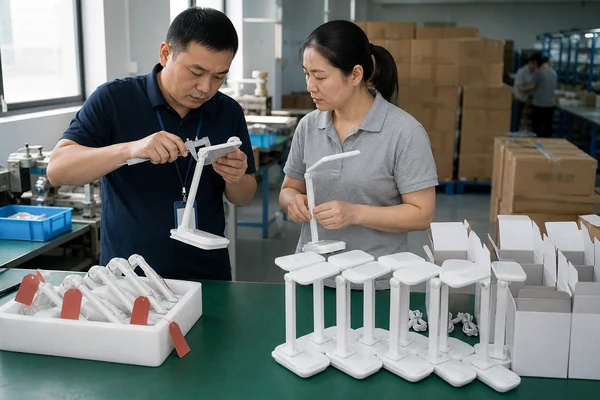
Do not reduce the decision to “accept” or “cancel” before you understand the defects. Separate the affected SKUs, defect types, quantities, causes, and customer impact. Compare the result with the purchase order and the remedy terms already agreed with the supplier.
Corrective options can include sorting, reworking, replacing affected units, producing missing quantities, correcting labels or packaging, or remaking the order. A discount may be reasonable for a cosmetic deviation that the buyer can sell and has chosen to accept. It is a poor remedy for a safety issue, failed function, wrong material, false marking, or product that cannot be sold in the destination market.
Require the supplier’s corrective-action proposal in writing. It should state what will be changed, how many units are affected, who will verify the work, and when the goods will be ready. Use a focused reinspection when the correction is narrow and traceable. Use a broader or new inspection when rework may have introduced other problems or when the original lot failed in several areas.
Do not authorize shipment merely because the supplier sends new photos. Photographs can prove a visible correction on the photographed units; they do not show how many units were repaired unless the verification method controls the full affected quantity.
Should you pay the balance after the inspection?
The inspection report is evidence for the payment decision, not an instruction to pay. Review it with the purchase agreement, supplier response, open corrective actions, shipping schedule, and any compliance documents still required.
| Report situation | Reasonable next step | Evidence to obtain first |
|---|---|---|
| Pass, with all required checks completed | Confirm there are no unresolved commercial or compliance conditions before following the agreed payment process | Final report, packing data, required documents, and verified payment instructions |
| Pass with an accepted deviation | Record the buyer’s approval and any price, replacement, or future-production condition in writing | Deviation details, affected quantity, photographs, and written agreement |
| Fail with correctable defects | Hold authorization until the agreed correction is completed and verified | Corrective plan, rework records, and reinspection or controlled verification |
| Incomplete or refused inspection | Treat the missing evidence as unresolved rather than assuming the goods pass | Reason for missing access, revised readiness confirmation, and a completed inspection |
| Critical safety, identity, or compliance concern | Stop release and obtain qualified technical, laboratory, compliance, or legal advice as appropriate | Traceable samples, test results, technical documents, and supplier explanation |
Do not confuse inspection with product compliance
A pre-shipment inspection can check labels, markings, document availability, construction, and tests listed in the approved checklist. It cannot decide every legal requirement for every destination market. The importer or brand owner must identify the rules that apply to the exact product and market.
For example, European Commission guidance states that EU importers must ensure that manufacturers have completed applicable conformity work, prepared technical documentation, applied required markings, and supplied appropriate instructions and safety information. See the official EU product compliance guidance. The U.S. Consumer Product Safety Commission also provides resources for importers whose products fall under CPSC requirements.
A passed visual and functional inspection does not replace required laboratory testing, certification, declarations, traceability records, or technical documentation. Confirm these requirements before production so the final inspection can verify the correct markings, labels, and documents against an established compliance plan.
Common pre-shipment inspection mistakes
- Booking the visit before the complete lot and final packaging are ready
- Sending an online listing instead of the approved product specification
- Letting the supplier choose and prepare all inspected units
- Using generic AQL settings without considering product risk or customer requirements
- Checking appearance while omitting dimensions, function, accessories, labels, or packaging
- Reading the pass/fail summary without reviewing unperformed tests and report evidence
- Accepting supplier photographs as proof that the full failed quantity was reworked
- Treating a passed shipment inspection as proof of regulatory compliance
Bulk order inspection workflow before balance payment
- Freeze the purchase order, specification, approved sample, artwork, packaging files, and change record.
- Define product-specific tests, sample selection, defect classes, and acceptance rules.
- Choose the appropriate check: warehouse receiving, independent factory inspection, laboratory testing, or a combination.
- Obtain written confirmation that the correct production lot and final packaging are ready.
- Give the inspector the controlled inspection pack before the visit.
- Review the full report, photographs, measurements, test results, defect counts, and missing checks.
- Record any accepted deviation or require a written corrective plan.
- Verify rework when the first result fails or remains incomplete.
- Confirm compliance documents, final packing data, shipping arrangements, and payment instructions.
- Authorize the balance and shipment only under the agreed contract conditions.
Buyers who need China-side coordination can send the product, order quantity, supplier details, approved specification, and destination country through the Dawon1688 contact page. The inspection scope and fees should be confirmed before work begins.
Final answer
Inspect a bulk order against controlled product and packaging requirements while the finished lot is still in China and before the payment or shipment decision that your contract links to inspection. Control sample selection, use measurable tests and defect rules, read the complete report, and verify any correction. Keep compliance evidence separate from routine quality inspection.
Frequently asked questions
1. How many units should be inspected in a bulk order?
The number depends on the lot size, inspection level, sampling plan, product risk, and tests required. An AQL-based plan determines a sample size and acceptance or nonacceptance thresholds for defined defect classes. High-risk characteristics, destructive tests, very small lots, or contract requirements may need a different sample or 100% checking.
2. Is a warehouse quality check the same as a factory pre-shipment inspection?
No. A warehouse can check identity, quantity, visible condition, packaging, photographs, and simple functions after goods arrive. A factory inspection can sample from the finished production lot and investigate production-related issues before the goods leave the supplier. The written scope matters more than the label used for the service.
3. Can goods from several 1688 suppliers be inspected after consolidation?
Yes, but the warehouse check should keep each supplier, purchase order, SKU, and carton group traceable. Consolidation is useful for quantity, identity, visible condition, packaging, and agreed tests. It may be too late for checks that require factory records, production access, specialised equipment, or large-scale rework.
4. Should I pay the balance if the report finds only minor defects?
Review the defect count, distribution, customer impact, agreed limits, and contract terms. A defect labelled minor may still matter to your brand or marketplace. If you accept it, record the affected quantity and any discount, replacement, sorting, or future-production condition before payment.
5. Who should pay for reinspection after a failed result?
The purchase order or inspection agreement should decide this before production. Buyers often ask the supplier to pay when reinspection is required because the goods failed agreed requirements, but the enforceable outcome depends on the contract and the cause. Confirm the fee, travel costs, and rescheduling terms in writing.
6. What if the supplier says sealed cartons cannot be opened?
Opening selected cartons and units should be agreed before the visit. The supplier can reseal them after inspection. If the supplier refuses access, the report should record the limitation, and the buyer should treat product and packing checks as incomplete rather than assuming the sealed goods conform.
7. Does a passed pre-shipment inspection prove regulatory compliance?
No. It proves only that the sampled goods passed the checks and criteria listed in the report. Regulatory compliance may require product-specific testing, technical documentation, declarations, markings, warnings, traceability, or registration. The importer must confirm the requirements for the destination market.
Sources
- ISO 2859-1:2026: AQL-indexed sampling schemes for lot-by-lot inspection by attributes.
- American Society for Quality: ANSI/ASQ Z1.4 and Z1.9: acceptance sampling standards and plan types.
- European Commission: General product compliance: responsibilities of manufacturers, importers, and distributors in the EU.
- U.S. Consumer Product Safety Commission: eFiling resources for importers: importer resources for products subject to CPSC requirements.