Key takeaways
- The product supplier is usually easier to manage because it can check the package against the actual product and complete final packing before shipment.
- A packaging factory gives you more direct control over structure, board, printing, finishes, and repeat production, but someone must coordinate two suppliers.
- The cheapest box quotation may produce the more expensive order once tooling, delivery within China, packing labor, rejected boxes, storage, and international freight are included.
- Do not approve bulk packaging from a screen image alone when fit, color, finish, protection, or retail presentation affects acceptance.
What are the two sourcing options?
Option 1: The product supplier manages the packaging
Your product supplier may make simple packaging in-house, buy it from a regular subcontractor, or ask a nearby printer to produce it. The supplier then receives the boxes or bags, puts the product inside, applies labels, and packs the finished units into export cartons.
This route gives you one commercial contact. It does not necessarily mean that the product factory also owns packaging equipment. Ask who actually produces the packaging, which work is subcontracted, and who accepts responsibility if the packaging is late or does not fit.
Option 2: You contract a packaging factory separately
You choose and pay a specialist packaging manufacturer. That factory develops the dieline, materials, printing, surface finishes, and samples. It can send finished packaging to the product supplier for final assembly, to a China warehouse for inspection, or directly to a fulfillment location if packing happens elsewhere.
Direct control can help when packaging is a substantial part of the product experience. It also creates an extra handoff. Product dimensions, packaging dimensions, production dates, delivery addresses, receiving checks, packing charges, and responsibility for rejects must be agreed before either factory starts bulk production.
Product supplier vs packaging factory: a quick decision table
| Decision factor | Product supplier manages packaging | Separate packaging factory |
|---|---|---|
| Best fit | First orders, simple boxes, labels, sleeves, bags, or standard inserts | Engineered structures, premium printing, unusual materials, or a packaging system shared by several products |
| Coordination | One main contact and fewer handoffs | You, an agent, or a project manager must coordinate two suppliers |
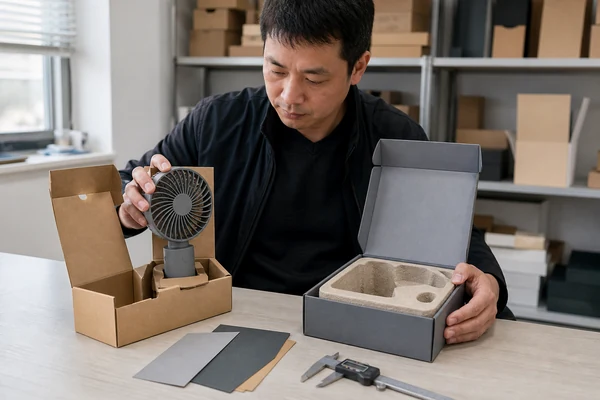
| Product fit | Easier for the product supplier to test during packing | Requires accurate product samples, dimensions, tolerances, and fit approval |
| Technical packaging knowledge | Varies; the supplier may offer only familiar or standard options | Usually broader capability in structures, substrates, print processes, and finishes |
| Price visibility | Convenient bundled quote, but the packaging markup or subcontractor cost may be unclear | Direct packaging quote, with separate transport and packing costs |
| MOQ | May align with the product order if the supplier can combine work or use a standard structure | Packaging MOQ follows the printer, material, setup, and finishing process |
| Accountability | One supplier can be responsible for the packed unit if this is written into the order | Responsibility must be divided between packaging production, receiving, assembly, and final inspection |
| Repeat orders | Simple if you keep using the same product supplier | Easier to use one packaging system across several product factories |
When should you let the product supplier handle the packaging?
Your first order is small and the packaging is simple
A new brand often needs a market test more than a custom box engineering project. A plain carton with a printed label, a stock pouch with a branded sticker, or a standard box with a printed sleeve may be enough. These formats can keep setup work and leftover inventory under control.
This also helps when the product MOQ is lower than the packaging factory’s economical print run. Packaging and product quantities do not automatically match. The methods in the lower-MOQ guide for custom products can be applied here: keep the structure standard, limit variants, and customize the parts that buyers actually see.
The product must be packed or assembled at the factory
Some products need to be folded, charged, sealed, bundled, protected, or placed into a fitted insert immediately after production. Fragile parts may need a packing trial before the production line can be finalized. In these cases, the product supplier is already closest to the work.
A separate packaging factory can still make the box, but the product supplier should approve the sample, receive the bulk packaging, check incoming quantities, and document any defects before packing begins.
You want one party responsible for the packed product
When the product supplier quotes the finished packed unit and accepts the approved packaging specification, there is less room for two factories to blame each other. Put that responsibility in the purchase order. A verbal promise that the supplier will “take care of packaging” is too vague.
Before selecting that route, verify whether packaging is handled in-house or subcontracted. The same check belongs in your wider process for choosing a supplier for product customization.
When is a separate packaging factory the better choice?
The package needs structural or print expertise
Rigid gift boxes, molded pulp inserts, folding cartons with locking tabs, color-critical retail boxes, foil stamping, embossing, spot coatings, or complex windows need more than a logo file. A packaging specialist can explain board direction, print process, finishing limits, glue areas, tolerances, and assembly sequence. That reduces guesswork before tooling and bulk printing.
You want one packaging system across several products
A brand may buy related products from different factories but want the same box style, paper, color standard, and finish. Ordering packaging from one specialist can make the range easier to manage. The packaging factory can maintain common specifications while adjusting inserts, labels, or sleeves for each SKU.
This arrangement works only if each product factory receives the correct version and reports what it used. Put SKU codes on bundles and outer cartons as well as the packing list.
You need direct access to packaging documents
Material declarations, test reports, ink or adhesive information, recycled-content evidence, and production records may matter for the destination market or product category. For example, the U.S. Food and Drug Administration treats packaging components that contact food as food-contact substances under specific conditions of use. Buyers of food packaging should check the intended material and use against the applicable FDA route rather than accept a generic “food grade” statement. See the FDA’s Packaging and Food Contact Substances resources.
EU packaging rules are also changing. The European Commission states that Regulation (EU) 2025/40 entered into force on February 11, 2025 and generally applies from August 12, 2026. It covers packaging placed on the EU market regardless of material or origin. Confirm the rules that apply to your product, packaging role, market, and placement date through the European Commission packaging waste page.
Compare total packaging cost with the unit price
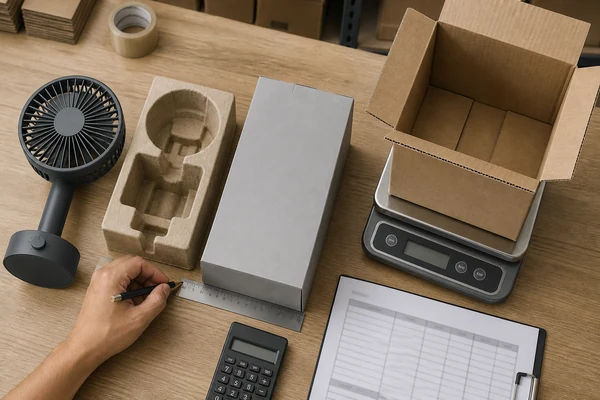
A direct packaging quotation can look lower because it excludes the work performed by the product supplier. A bundled quotation can look higher because coordination and packing are already included. Put both options into the same cost table before deciding.
| Cost line | What to confirm | Common omission |
|---|---|---|
| Packaging units | Quantity, unit price, overrun or underrun tolerance, and tax basis | The quote assumes more boxes than the product order |
| Development | Dieline, structural design, artwork check, digital proof, and physical sample | Several sample rounds are needed |
| Tooling and setup | Cutting die, printing plate, mold, color matching, and finishing setup | Setup repeats when artwork or dimensions change |
| China-side delivery | Freight from packaging factory to product factory or warehouse | Volumetric cartons make domestic delivery more expensive |
| Receiving and storage | Carton count, incoming inspection, unloading, storage period, and moisture protection | Boxes arrive before the product is ready |
| Assembly and packing | Folding, inserting, labeling, sealing, bundling, and repacking labor | The product factory charges separately for outside packaging |
| Quality loss | Allowance for print defects, crushed boxes, bad glue, or fit failures | No one has agreed who pays for unusable packaging |
| International freight | Finished unit dimensions, master-carton dimensions, quantity per carton, and chargeable weight | A larger retail box increases shipment volume |
Add these lines to the cash plan described in the first custom-order budget guide. Packaging affects more than presentation; it changes how much inventory you fund, store, assemble, and ship.
How should two factories coordinate packaging production?
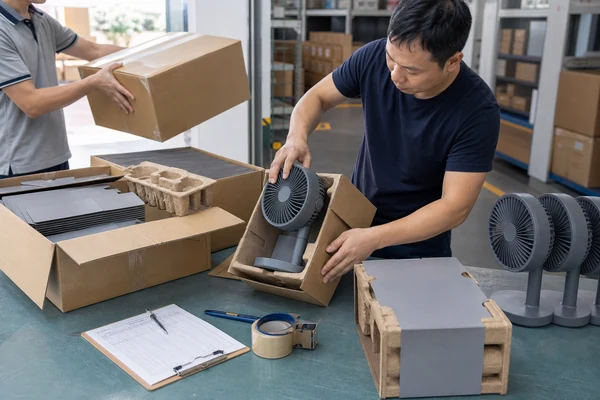
- Freeze the relevant product details. Record the dimensions, tolerances, weight, accessories, surface protection, and packing orientation. Use a production-representative sample when possible.
- Define each packaging layer. Separate the consumer package, insert or protective material, labels, master carton, and pallet requirements. Do not use “packaging” as one undefined line item.
- Create and approve the dieline. The artwork should be placed on the packaging factory’s current dieline. Record the file version and approval date.
- Test a physical package with the product. Check fit, movement, abrasion, closing force, barcode location, visible marks, and the unboxing sequence. A beautiful empty box proves very little.
- Run a small packing trial. Ask the product supplier to pack several units using the intended process. Time the work and record any damage or awkward steps.
- Set receiving rules. Decide who counts packaging cartons, checks visible damage, samples print quality, reports shortages, and opens a claim.
- Inspect the finished packed unit. The final check should compare the product, retail packaging, labels, accessories, and export carton with the approved specification.
If an agent or warehouse coordinates the handoff, define the service and fee before the factories ship. Dawon1688 lists service fees for payment assistance, warehousing, quality inspection, and labeling on its pricing page. Packaging coordination, receiving checks, assembly, or repacking should be quoted for the specific order when required.
What belongs in a custom packaging specification?
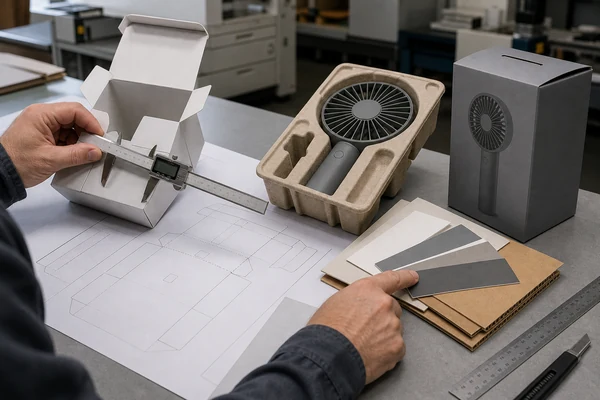
The specification should let a new production operator or inspector identify the approved result without relying on a chat history. Include the following fields when they apply:
- Packaging level and purpose: consumer pack, protective pack, shipping carton, or display unit
- Finished internal and external dimensions, measurement points, and tolerances
- Material type, grade, thickness or weight, flute or board construction, and approved alternatives
- Artwork filename and version, print process, color references, print area, and acceptable color standard
- Finish details such as lamination, varnish, foil, embossing, window film, glue, or coating
- Insert dimensions, material, product orientation, accessories, and movement allowance
- Barcode data, legal text, warnings, country-of-origin marking, label material, and placement
- Packing sequence, sealing method, units per master carton, carton marks, and carton weight limits
- Approval samples, inspection method, defect definitions, sampling plan, and photo requirements
- Ownership and storage terms for dies, plates, molds, artwork files, and unused packaging
Label requirements depend on the product and destination. In the United States, the FTC’s Fair Packaging and Labeling Act requires covered consumer commodities to disclose information such as product identity, net contents, and the responsible business. Food, drugs, cosmetics, and other regulated categories follow additional or different rules. Check the authority for the product instead of copying a label from a competitor.
If inventory will go to Amazon, packaging also needs to match the current fulfillment requirements for the product type. Amazon’s FBA prep, packaging, and labeling guide explains barcode placement, secure packaging, sets, bagging, and other preparation topics. Marketplace requirements can change, so review the live account guidance before printing a large run.
A practical selection rule for a new brand
Use the product supplier for the first run when the packaging is simple, the order is small, and correct fit or final assembly matters more than a special print effect. Ask for an itemized packaging price and confirm whether production is subcontracted.
Go directly to a packaging factory when you can define the package, meet its production conditions, and manage the handoff. The stronger case is usually a repeatable packaging program: several SKUs, stable dimensions, premium retail presentation, specialist materials, or documentation that the product supplier cannot provide.
A hybrid route often works best. The packaging factory makes the package, while the product supplier tests it, receives it, and packs the goods. A sourcing coordinator can manage the schedule and inspection when neither factory should control the whole project.
Questions to ask before placing the packaging order
- Who manufactures the packaging, and which processes are subcontracted?
- Does the packaging MOQ apply per structure, size, artwork, color, or SKU?
- Which sample will become the approval reference for bulk production?
- Has the product supplier tested a physical box with a production-representative product?
- Who pays for transport to the packing location, unloading, inspection, storage, and assembly?
- Who is responsible if the package meets the drawing but does not fit the bulk product?
- What quantity variation and defect allowance can the packaging factory deliver?
- Which material, printing, compliance, or recycled-content documents are required?
- How will unused boxes, dies, plates, and approved files be identified and controlled?
- What are the final packed dimensions and units per export carton?
Conclusion
Choose the product supplier for a straightforward first run and fewer handoffs. Choose a packaging factory when specialist capability and repeat control justify the extra coordination. Whichever route you use, approve the packed product, assign responsibility in writing, and compare total cost rather than the box price.
Dawon1688 can compare sourcing routes, coordinate packaging with a product supplier, receive components in China, and arrange inspection or repacking according to the agreed scope. Send the product details, target quantity, packaging reference, and destination requirements through the contact page for a project-specific assessment.
Frequently asked questions
1. Can a separate packaging factory deliver boxes directly to my product supplier?
Yes, if the product supplier agrees to receive and use outside packaging. Confirm the delivery address, contact person, carton marks, expected date, receiving count, inspection method, storage space, and packing charge before shipment. The packaging factory should send a packing list, while the product supplier should report shortages or visible damage promptly.
2. Who should check that the insert fits the mass-produced product?
The product supplier should test the insert against production-representative units before bulk packing. The packaging factory controls the insert against the approved drawing, but it may not see normal variation in the finished product. Record who makes the final fit decision and what happens if product dimensions move outside the agreed tolerance.
3. Should retail packaging and export cartons come from the same supplier?
They can, but they do not have to. A specialist may be best for printed retail boxes, while the product factory or a local carton supplier can produce master cartons close to the packing line. Use one supplier when material control and scheduling benefit from consolidation. Split them when the two package types require different capability or when shipping empty export cartons would add cost.
4. When is a digital packaging proof not enough?
A digital proof cannot confirm physical fit, material feel, print color on the chosen substrate, foil or embossing quality, glue strength, or protection in transit. Request a physical sample when any of those points affects acceptance. A plain structural sample may be enough for fit; a printed production-method sample is safer for color-critical or premium packaging.
5. Can one packaging structure be shared across several product SKUs?
Yes. A common outer box can reduce the number of structures you manage if the products have compatible dimensions and protection needs. Use different inserts, sleeves, labels, or artwork versions to identify each SKU. Check that every variation remains easy to pack and that workers cannot put the wrong product into a similar box.
6. Should country-specific labels be printed on the box or applied later?
Print stable information directly when the wording will not change and the entire run goes to one market. Apply labels later when destinations, languages, importer details, warnings, or marketplace barcodes vary. Late labeling adds labor but can prevent a large stock of boxes from becoming unusable after a regulatory, distributor, or SKU change.
7. Which packaging records should I keep for repeat orders?
Keep the approved dieline, editable artwork and print-ready file, version number, color references, material specification, finished dimensions and tolerances, physical approval sample, inspection standard, defect photos, packing method, units per carton, supplier quotation, tooling record, and change history. Send the current version with every repeat order instead of asking the factory to copy the previous batch from memory.