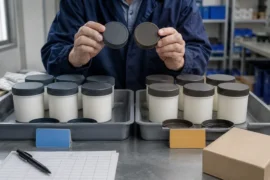
A new brand can often get a lower MOQ when it uses a supplier’s existing product, stock materials, standard colors, and a simple logo or label. Full custom shapes, formulas, components, and packaging are less flexible. Ask the supplier to separate the product, material, process, packaging, and variant minimums. Then negotiate the constraint that is actually driving the quantity. Expect a trade-off such as a higher unit price, a separate setup charge, fewer variants, or neutral packaging.
The number printed on a listing is only a starting point. A supplier may accept 100 finished units but still need to buy material for 500. A box printer may require 1,000 cartons even when the product factory accepts 200 units. Unless those minimums are separated, asking “Can you lower the MOQ?” produces an answer without showing what must change.
Key takeaways
- There is rarely one MOQ. Product, material, component, decoration, packaging, and color minimums may come from different companies.
- The easiest first step is usually an existing product with limited customization, not a fully new product built at trial-order volume.
- Ask for several written configurations so you can compare quantity, unit price, setup cost, lead time, and unused material.
- Fewer colors, sizes, scents, or packaging versions often reduce the effective minimum more than aggressive price bargaining.
- A small order still needs an approved specification, suitable compliance evidence, and a defined inspection plan.
First identify which MOQ you are negotiating
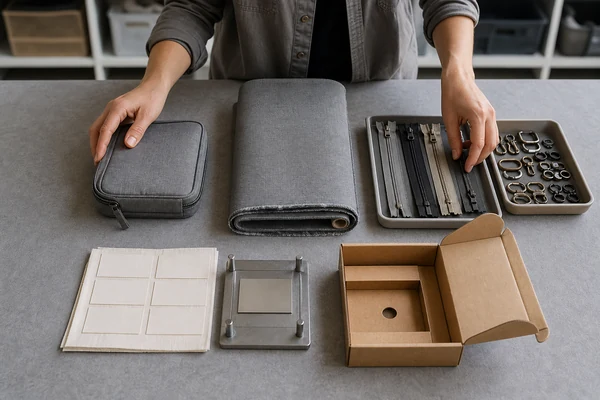
MOQ means minimum order quantity, but the unit behind the number matters. It may apply to one purchase order, one model, one color, one production run, or one packaging design. Ask the supplier to name both the minimum and its basis.
| MOQ layer | What creates it | Question to ask | Possible adjustment |
|---|---|---|---|
| Finished-product MOQ | The supplier’s minimum economical production or sales quantity | Is this minimum per order or per model? | Use an existing model or accept a trial-order unit price |
| Material MOQ | A mill, compounder, or other upstream supplier sells material in a minimum lot | Which material creates the minimum, and how much will remain? | Use a stock material, standard grade, or agreed stored remainder |
| Component MOQ | A custom part, accessory, electronic component, closure, or trim has its own order requirement | Can the product use a stocked component with the same required performance? | Keep the standard component for the pilot batch |
| Process MOQ | Printing, dyeing, coating, molding, embroidery, or machine setup has a fixed preparation cost | Can the setup fee be quoted separately from the production quantity? | Pay the setup charge or choose a simpler process |
| Packaging MOQ | The packaging converter has a print, board, film, bottle, or label minimum | Is the packaging supplied by the product factory or a separate vendor? | Use a stock box, short-run label, or unprinted packaging |
| Variant MOQ | Each color, size, scent, voltage, or artwork version requires separate material or setup | Is the minimum per variant, and which variants can share one run? | Launch fewer variants or use one common base material |
A price tier is not always the same as an MOQ. A listing may show a better price at 500 units while still allowing a smaller purchase at a higher price. It may also show a low minimum for an in-stock item that no longer applies after you change the color, material, logo, or box.
Alibaba Group describes 1688.com as a domestic wholesale marketplace. Its listings can help you find products and suppliers, but a listed quantity does not confirm an export-ready custom order. Get the custom specification, variant allocation, packaging, lead time, and minimums in one written quotation.
Choose the lowest-risk level of customization for the first order
The amount of new manufacturing work usually has more influence on MOQ than the size of the buyer’s brand. Before negotiating, decide what customers must notice in version one and what can wait for a later order.
| Configuration | What changes | MOQ pressure | Useful first-order case |
|---|---|---|---|
| Ready stock | No product or packaging change | Usually the lowest, subject to stock availability | Testing demand before paying for branding |
| Private label | Existing product with logo, label, insert, or simple packaging change | Often driven by the decoration or packaging process | Launching a brand around a proven base product |
| Semi-custom or supplier-base design | Existing design with selected color, material, accessory, or feature changes | Depends on the changed component and material lot | Adding useful differentiation without new tooling |
| Full custom production | New geometry, tooling, formulation, electronics, or construction | Usually affected by several upstream minimums and setup stages | A validated product with enough budget and demand evidence |
If your first version only needs branding, do not request a new mold, custom material, special finish, and printed retail box in the same negotiation. The private-label article on adding a logo to 1688 products explains how decoration, artwork, and packaging should be approved before production.
Why suppliers set higher MOQs for custom products
A factory may spend similar time preparing artwork, cleaning a machine, mixing a color, programming equipment, or setting up an inspection station for 100 units and 1,000 units. On a small run, that cost is divided across fewer saleable pieces. The supplier may raise the unit price, charge setup separately, or decline the work.
The factory is also buying from other businesses. Fabric, resin, sheet metal, bottles, electronic parts, printed film, and cartons can each have an upstream minimum. The finished-product supplier cannot always lower that quantity through negotiation. It may be able to use stocked material, place your order alongside another run, or hold the unused balance, but each option needs written conditions.
Some minimums protect production consistency. A short color batch can be difficult to reproduce. A very small run may produce too few saleable units after setup waste or destructive testing. When a supplier gives one of these explanations, request the calculation and the alternatives. Treating every MOQ as an arbitrary sales barrier will not uncover the workable option.
Ask for three quotations instead of one lowest number
Send every supplier the same product brief, target market, quantity, variants, packaging plan, and quality requirements. Then request three configurations:
- The lowest practical quantity using an existing product, stock materials, standard colors, and neutral packaging.
- The lowest practical quantity with the branding changes that customers must see in the first launch.
- The supplier’s normal production quantity with the full requested customization and its better unit price.
Each quotation should show the unit price, setup and tooling charges, sample cost, material or component commitments, packaging quantity, expected waste or overrun, lead time, payment milestones, and quote validity. If unused materials remain, ask who owns them, where they will be stored, how they will be identified, whether they expire, and what happens if the next order never arrives.
The comparison also tests the supplier’s communication. A supplier that can explain the quantity constraint is more useful than one that says “factory rule” without identifying the material, process, or subcontractor involved. For a broader evaluation process, use the supplier selection guide for customized products.
Eight practical ways to lower a custom-product MOQ
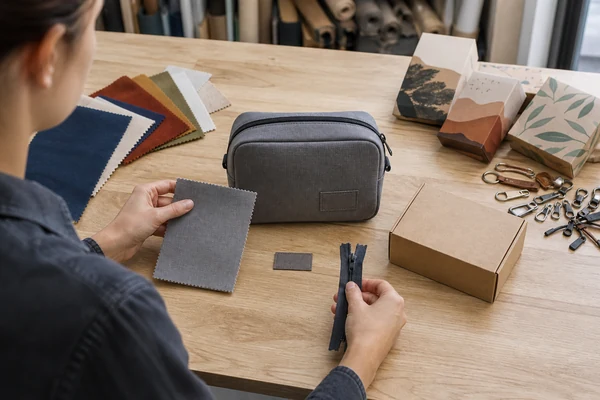
- Start with a product the supplier already makes. Keep its dimensions, construction, and core components unchanged for the pilot order.
- Choose stock materials and finishes. Ask for the supplier’s current color cards, fabric bases, resin grades, hardware, bottles, or accessories before specifying a new one.
- Reduce the number of variants. One color across three sizes may be easier than three colors across three sizes because the color lot is shared.
- Separate the product from the packaging. A plain box with a compliant label or printed sleeve may fit a smaller launch better than a fully printed box made in a large converter run.
- Pay fixed work separately. A supplier may accept fewer finished units when artwork setup, print plates, fixtures, testing, or machine setup are not hidden inside the unit price.
- Ask whether material can be bought now and converted in stages. Use this only with clear ownership, storage, quantity, shelf-life, damage, and exit terms.
- Accept a quoted small-run unit price when the total cash exposure is lower. Compare the whole order, not the emotional appeal of the cheapest unit price.
- Share a realistic reorder condition. Sales data, a launch date, and a defined reorder trigger are more credible than an unsupported promise of future volume.
Do not claim that a large repeat order is guaranteed. Experienced suppliers hear that promise every day. A clear pilot plan, prompt sample decisions, complete artwork, and dependable payment usually say more about the buyer than a forecast with no supporting plan.
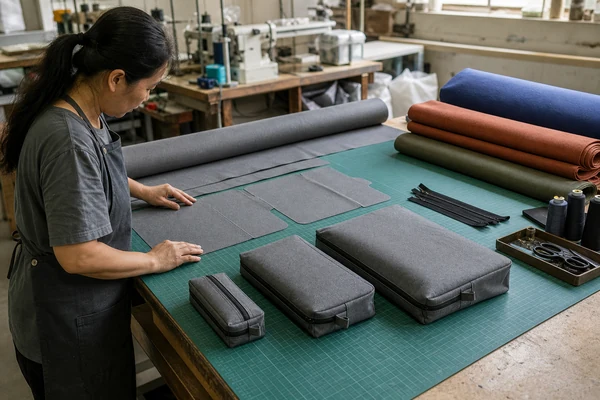
What can and cannot usually be combined to meet MOQ?
| Combination request | When it may work | What can stop it |
|---|---|---|
| Several sizes of one color | The same material and color lot serves all sizes | Separate molds, components, or packing quantities for each size |
| Several colors of one model | The supplier has stock colors or the process allows a small color change | A dye, paint, resin, or print minimum applies to every color |
| Different products from one factory | They share material, production equipment, decoration, or packaging | Each product uses a different production line or upstream vendor |
| Product and packaging quantities | Unused packaging can be stored and remains suitable for the next order | Packaging expires, is damaged, changes legally, or cannot be reused |
| Orders from different suppliers | They can be combined later for warehousing or international shipping | Consolidation does not combine separate factories’ production MOQs |
Shipment consolidation can reduce repeated logistics handling or minimum freight charges after production. It does not normally solve a factory’s material or machine-run minimum. Read the shipment consolidation guide before treating these as the same problem.
Calculate the cash trade-off before accepting a lower MOQ
A lower quantity can carry a higher unit price and still require less launch capital. Consider a hypothetical comparison:
| Scenario | Quantity | Unit price | Product subtotal | Inventory exposure |
|---|---|---|---|---|
| Pilot configuration | 200 units | US$8 | US$1,600 | 200 units to sell or revise |
| Standard production run | 500 units | US$6 | US$3,000 | 500 units to sell or revise |
The pilot costs US$2 more per unit but uses US$1,400 less for the products. That does not automatically make it cheaper. Samples, tooling, inspection, freight, duties, and service fees still belong in the comparison. Freight and inspection can also cost more per unit when spread across a small lot. Add those fixed costs, then decide whether holding 300 extra units is worth the lower unit price.
Base the decision on landed cost and the first-order cash requirement. The factory unit price covers one line. Dawon1688 publishes its current service fee structure, while product, logistics, and third-party costs still need an order-specific quote.
Do not weaken the sample or specification to win a lower MOQ
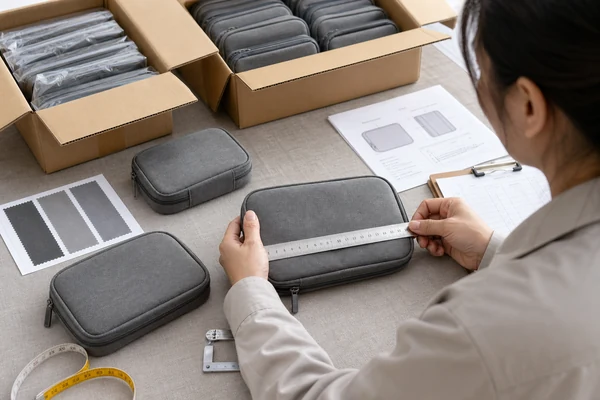
Record the exact material, dimensions, performance, color reference, approved artwork, packaging, labeling, defect criteria, and allowed tolerances. If the supplier substitutes a stocked component to reduce MOQ, approve that exact component in the sample and production specification. “Use something similar” is not a workable control.
A small production lot still needs a proportionate inspection plan. ISO 2859-1:2026 defines acceptance sampling plans for inspection by attributes. The appropriate plan depends on the lot, risk, product, and buyer requirements. Random inspection does not prove that every unit is defect-free, and a very small batch may call for a different plan or a higher level of checking. Agree on the method before production, not after the cartons are sealed.
Low MOQ does not remove product compliance duties
Import and product rules depend on the item and destination. The European Commission’s Access2Markets import guide tells EU importers to check applicable product requirements, restrictions, packaging, labeling, testing, and customs documents. A smaller run does not turn a regulated product into an unregulated one.
Some markets have limited small-business procedures for specific products. These should not be treated as a general exemption. For example, the U.S. Consumer Product Safety Commission explains that qualifying small-batch manufacturers may receive relief from certain third-party testing requirements for children’s products, but they must still comply with the underlying rules and provide the required certification. See the CPSC small-batch manufacturer guidance for the exact conditions.
Identify the target market before the supplier changes a material, component, coating, battery, label, or package to reach a lower quantity. A substitution that solves MOQ can create a new testing or documentation problem.
Check what a low-MOQ offer actually includes
When a supplier agrees quickly, ask what changed. The answer may be reasonable: a stock product, a shared material run, an existing mold, leftover packaging, or a higher unit price. It may also reveal that the offer is a sample, an undecorated item, excess inventory, or a different specification.
Request current photos or video of the base product, its packaging, relevant material or component options, and the production area. Ask whether decoration and packaging are performed in-house or subcontracted. Compare the legal company on the quotation, invoice, payment instructions, and marketplace account. The records should still identify who is responsible for the goods and payment.
Red flags in a lower-MOQ negotiation
- The supplier lowers the quantity but will not issue a revised quotation or specification.
- The sample is described as identical to production, yet its material or process is not recorded.
- The supplier promises full customization without discussing tooling, material, component, or packaging minimums.
- Unused custom material or packaging must be paid for, but ownership and storage are not documented.
- The unit price excludes setup, scrap, domestic freight, inspection, or other charges that appear only after the deposit.
- The supplier asks for payment to an unrelated person or company without explaining the relationship.
- The lower quantity depends on changing a compliance-related component without reassessing the target-market requirements.
Pause the order when the lower MOQ depends on vague specifications or an unrecorded substitution. A smaller batch does not compensate for a product that is harder to verify.
What can a China sourcing agent do about MOQ?
A sourcing agent can ask the supplier and its subcontractors which layer creates the minimum, compare alternative base products, translate technical details, coordinate samples, and arrange separate packaging or labeling. After production, an agent may receive and consolidate goods from several suppliers before international shipping.
An agent cannot guarantee that every factory will accept a small custom run. It also cannot make a new mold, special formulation, or upstream material minimum disappear. The agent should identify the quantity constraint, collect comparable quotations, record any compromise, and check the delivered goods against the approved order.
If you want Dawon1688 to review a custom-product request, send the product reference, target market, expected first quantity, required variants, branding files, packaging idea, and which features cannot change through the contact page.
Lower-MOQ request checklist
- Define the base product and the changes required for the first launch.
- State the target market and known compliance or labeling requirements.
- List the first-order quantity by model, color, size, voltage, scent, or artwork.
- Ask for the product, material, component, process, packaging, and variant minimums separately.
- Request stock-material and standard-color options.
- Ask for quotations at the lowest feasible quantity and the supplier’s normal quantity.
- Separate unit price from samples, setup, tooling, packaging, inspection, and logistics.
- Record ownership and storage terms for unused material, components, and packaging.
- Approve the final sample and written specification before bulk production.
- Confirm the inspection scope, payment milestones, lead time, and defect remedy.
Conclusion
A new brand gets a workable lower MOQ by reducing the supplier’s real production constraint. Start with an existing base product, use stock inputs, limit variants, and separate packaging or setup costs where practical. Compare the lower-quantity offer with the normal production run on total cash, landed cost, and inventory risk. Keep the specification, compliance work, and quality controls intact.

Frequently asked questions
1. Is MOQ normally set per order, per product, per color, or per size?
It can use any of those bases. Ask the supplier to state the finished-product MOQ and every variant minimum in the quotation. A 500-unit total may still require 250 units per color, while size quantities may be mixed if they share the same material and production run. Do not divide the total across variants until the supplier confirms the allocation.
2. Can I combine colors or sizes to meet a supplier’s MOQ?
Sometimes. Sizes are easier to combine when they use one material and color lot. Colors may require separate dye, paint, resin, print, or cleaning setups. Ask which processes are shared and obtain the accepted quantity for every color-size combination in writing.
3. Can I buy the full raw-material MOQ but manufacture only part of it now?
A supplier may agree to staged production, but the contract should identify the purchased material, paid quantity, ownership, storage location, remaining balance, shelf life, loss or damage responsibility, future conversion cost, and exit terms. The arrangement is risky when the material degrades, becomes obsolete, or cannot be transferred to another factory.
4. Does a lower product MOQ also reduce the custom packaging MOQ?
No. The packaging converter may have a separate minimum for boxes, film, bottles, inserts, or printing. Ask for stock packaging with labels, short-run digital printing, or an unprinted box for the pilot. If you buy extra custom packaging, document its ownership, storage, and future use.
5. Is paying a higher unit price worth it for a lower first-order MOQ?
It can be worthwhile when the lower quantity releases less cash and limits unsold inventory or revision risk. Compare the full first-order cash requirement and landed cost. A high small-run price may still be rational, while fixed tooling, inspection, and freight can make a very small lot inefficient.
6. Can different products from the same supplier be combined to meet MOQ?
They can be combined when the products share the material, component, process, or production setup that creates the minimum. Ordering unrelated items from one seller does not automatically satisfy each factory’s MOQ, especially when the seller sources them from different production sites. Ask for the production site and MOQ basis for every product.
7. What should I get in writing after a supplier agrees to a lower MOQ?
Obtain a revised quotation and purchase specification showing the exact quantity by variant, unit price, setup and tooling fees, approved material and components, artwork, packaging, lead time, payment milestones, allowed overrun or underrun, inspection criteria, and remedy for nonconforming goods. Record any unused material or packaging separately.