Importing induction cookers from China to Germany can be a highly cost-effective strategy for retailers, distributors, and e-commerce sellers. Germany is Europe’s largest market for kitchen appliances, and Chinese manufacturers offer competitive pricing, advanced technology, and reliable quality. Here’s a comprehensive guide to help you navigate the entire process.
Why Source Induction Cookers from China?
China is the world’s largest manufacturer of induction cookers, producing over 70% of global supply. Sourcing from 1688.com — China’s leading wholesale marketplace — offers several advantages:
- Competitive pricing: Factory-direct prices are typically 40-60% lower than European wholesale prices
- Wide product range: From portable single-burner units to commercial multi-zone cooktops
- Advanced technology: Many Chinese manufacturers use German-designed components and meet EU standards
- Customization options: OEM/ODM services allow branding, packaging, and feature customization
- Proven export experience: Most manufacturers have extensive experience exporting to European markets
Understanding German Market Requirements
Before importing induction cookers to Germany, you must ensure compliance with EU regulations:
- CE certification: Mandatory for all electrical appliances sold in the EU. Verify that your supplier provides valid CE documentation.
- GS mark (Geprüfte Sicherheit): While not mandatory, the GS safety mark significantly increases consumer trust in Germany
- Energy efficiency rating: Induction cookers must comply with EU energy labeling requirements (A+++ to D scale)
- Voltage compatibility: Germany uses 230V/50Hz. Ensure products are configured for European electrical standards.
- German plug type: Products must come with Type F (Schuko) plugs for the German market
Finding Reliable Suppliers on 1688.com
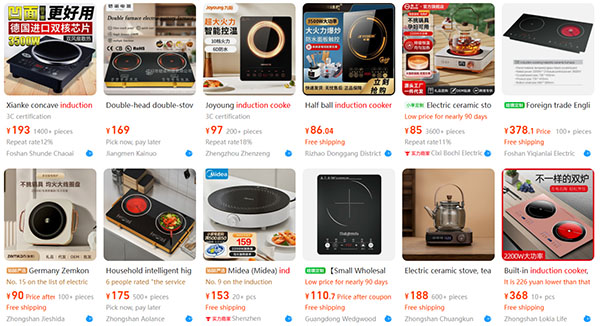
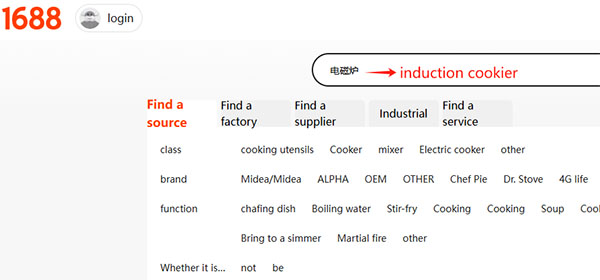
When searching for induction cooker suppliers on 1688.com, use these Chinese keywords for best results:
- 电磁炉 (induction cooker) — the most common search term
- 商用电磁炉 (commercial induction cooker) — for restaurant-grade equipment
- 嵌入式电磁炉 (built-in induction cooktop) — for kitchen integration
- 便携电磁炉 (portable induction cooker) — for compact models
Evaluate suppliers by checking their verification status, transaction history, buyer reviews, and production capacity. Request product samples before placing bulk orders to verify quality firsthand.
Quality Inspection and Testing
Before shipping, arrange a thorough quality inspection:
- Electrical safety testing: Verify CE compliance with independent lab testing
- Performance testing: Check heating efficiency, temperature control accuracy, and noise levels
- Build quality inspection: Examine materials, construction, and finish quality
- Packaging inspection: Ensure packaging meets international shipping standards
Working with a local sourcing agent can streamline this process, as they can visit factories in person and conduct on-site inspections.
Shipping and Logistics
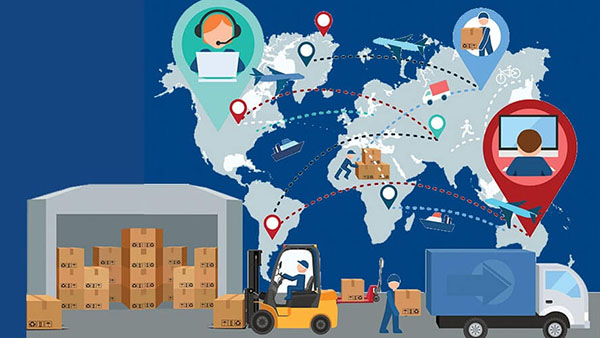
Several shipping options are available for transporting induction cookers from China to Germany:
- Sea freight (FCL/LCL): Most cost-effective for bulk orders. Transit time: 30-40 days. A 20-foot container holds approximately 2,000-3,000 units.
- Rail freight: China-Europe Railway Express offers a middle ground. Transit time: 15-20 days. Ideal for medium-volume orders.
- Air freight: Fastest option (5-7 days) but most expensive. Best for urgent or high-value orders.
- Express courier (DHL/FedEx): For samples or small shipments under 30kg
Customs Clearance in Germany
When importing to Germany, prepare for customs requirements:
- HS code: Induction cookers typically fall under HS code 8516.60 (other cooking appliances)
- Import duty: EU MFN duty rate for cooking appliances is generally 2-4%
- VAT (Einfuhrumsatzsteuer): 19% standard rate in Germany
- CE documentation: Must present CE certificates at customs
- Product compliance: Ensure all labeling meets German requirements (German language instructions, manufacturer details)
Cost Breakdown Example
Here’s an estimated cost breakdown for importing 500 portable induction cookers:
- Product cost (ex-factory): $8-12 per unit
- Domestic shipping in China: $0.50-1 per unit
- Sea freight to Hamburg: $1,500-2,500 total ($3-5 per unit)
- Customs duty (3%): $0.35-0.50 per unit
- VAT (19%): $2.50-3.50 per unit
- Quality inspection: $300-500 total
- Estimated landed cost: $15-22 per unit
Compare this to German wholesale prices of 35-60 euros per unit, and the margin potential is clear.
Related Articles
- How to Purchase Smartwatches from China to France?
- How to Purchase Electronic Products from China to the Netherlands?
- How to Import Stand Mixer from China?
- How to Order on 1688?
Frequently Asked Questions
What certifications are required to import induction cookers into Germany?
Induction cookers imported into Germany require CE marking with LVD (Low Voltage Directive), EMC (Electromagnetic Compatibility), and RoHS compliance. GS (Geprufte Sicherheit) marking is highly recommended for kitchen appliances. Products must also comply with German product safety laws (ProdSG). Ensure your Chinese supplier provides all certificates with valid test reports.
Do Chinese induction cookers meet German GS and CE safety standards?
Reputable Chinese manufacturers produce induction cookers that meet CE and GS standards, but quality varies by supplier. Always request valid certificates, verify them on official databases, and consider independent lab testing through TUV or SGS. Avoid suppliers without proper documentation, as non-compliant products face customs seizure and legal liability in Germany.
How do I handle voltage and plug compatibility for induction cookers from China?
Germany uses 230V/50Hz power with Schuko (Type F) plugs. Ensure the induction cooker is rated for 220-240V/50Hz and comes with a compatible plug or can be easily adapted. Most Chinese manufacturers can produce EU-spec products on request. Specify voltage and plug requirements clearly when ordering to avoid receiving domestic Chinese-spec products (220V but with Chinese plugs).
What is the import duty rate for kitchen appliances in Germany?
Induction cookers typically fall under HS code 8516.60, with an EU import duty rate of approximately 2-7%. Germany also applies 19% VAT (Mehrwertsteuer) on imported goods, calculated on customs value plus duties plus shipping. Check the EU TARIC database for the exact rate and consult a customs broker for accurate cost calculations.
How do I arrange shipping for heavy kitchen appliances from China to Germany?
For bulk orders, sea freight via Hamburg or Bremerhaven (30-40 days) is most cost-effective. Air freight via Frankfurt (5-10 days) works for urgent or smaller shipments. Ensure packaging is robust enough for heavy appliances with adequate foam protection. Work with a freight forwarder experienced in shipping appliances who can handle customs clearance.
Can I get German-language manuals and packaging from Chinese manufacturers?
Yes, most manufacturers on 1688 can provide German-language product manuals and packaging for OEM orders. Provide translated text and design files. For smaller orders, you may need to print manuals locally. German law requires product instructions in German for consumer products, so budget for translation and localization costs.
What warranty requirements does German law impose on imported appliances?
German law requires a 2-year statutory warranty (Gewahrleistung) on consumer products. You must offer repair, replacement, or refund for defects within this period. For appliances, negotiate 2-3% spare parts with your Chinese supplier and build warranty costs into your pricing. Product liability insurance is strongly recommended for electrical appliances sold in Germany.