
Key takeaways
- A good-looking sample is not automatically ready for production. It must match the intended materials, construction, performance, packaging, and market requirements.
- Your approval record should identify the exact sample version and list the measurements, tolerances, tests, artwork, and defects that will determine whether the bulk order is accepted.
- Ask whether the sample was made with normal production materials, tools, workers, and processes. A hand-finished prototype may not predict routine factory output.
- Sample approval sets a reference. It does not replace compliance testing, in-process control, or inspection of the finished production lot.
What does sample approval actually mean?
Sample approval is the buyer’s written decision that a specific product version is suitable to use as the reference for mass production. The approval should connect a physical unit, sample code, specification revision, artwork version, photographs, and test results to the same purchase order.
The useful question is not simply, “Do I like this sample?” It is, “Can the factory reproduce this result at the agreed quantity, cost, lead time, and quality level?” That distinction matters when you are developing a custom product with a supplier found through 1688 or another China sourcing channel.
Factories use several names for samples, and the terms are not always consistent. Confirm what each term means in your order:
- Prototype: an early unit used to test the design or construction. It may be handmade and may use substitute materials.
- Pre-production sample: a later sample intended to show the materials, components, workmanship, and appearance planned for the production run.
- Golden sample or approval sample: the controlled reference against which later units are compared.
- Production sample: a unit taken from the actual production lot rather than made separately in the sample room.
Before you approve anything, write down which of these you received and which purpose it serves. A prototype can confirm shape and usability while still being unsuitable as the final colour or workmanship standard.
Confirm how the sample was made
A sample can hide production problems when it receives extra hand-finishing or uses materials that will not be used for the order. Ask the supplier to identify any differences between the sample process and the planned production process.
Check materials and components
Record the material grade, composition, thickness, coating, finish, hardness, fabric weight, component model, or other attributes that affect the product. Use values that can be verified. “Premium plastic” and “high-quality fabric” are not specifications.
If a brand or model of component matters, list it. If the supplier may use an equivalent component, define the performance and approval process for that substitution. A lower-cost substitute introduced after sample approval can change fit, appearance, durability, electrical performance, or regulatory status.
Check tooling and production process
Ask whether the sample came from production tooling, temporary tooling, 3D printing, CNC machining, or hand assembly. These methods can produce visibly different surfaces and tolerances. For moulded, cast, stamped, printed, or sewn products, confirm whether the bulk order will use the same process and settings.
If the factory has not completed production tooling, approve the prototype only for the characteristics it can prove. Request a tooling sample or pre-production sample before releasing the full run.
Check whether subcontractors are involved
Printing, plating, painting, heat treatment, electronics assembly, and packaging may be handled by another factory. Identify which processes are subcontracted and whether the same subcontractor will make the bulk order. A supplier’s sample room cannot control an outside process unless the requirements and checks are passed to that subcontractor.
Use a measurable product sample approval checklist
The checklist should reflect the product rather than copy a generic inspection form. Start with the areas below, remove those that do not apply, and add product-specific failure modes.
| Area | What to record | Example evidence | Common approval mistake |
|---|---|---|---|
| Identity | Model, SKU, version, colour, size, sample ID | Labelled sample and dated photos | Approving a sample that cannot be traced to the order |
| Materials | Grade, composition, thickness, finish, component model | Specification sheet, material declaration, test report | Accepting a marketing description instead of a defined material |
| Dimensions | Critical measurements, weight, capacity, and tolerances | Marked drawing and measurement record | Recording only nominal dimensions with no tolerance |
| Appearance | Colour reference, gloss, texture, print position, acceptable variation | Colour standard, artwork proof, close-up photos | Judging colour from a phone screen alone |
| Function | Operating sequence, output, load, fit, runtime, controls | Test method and results | Trying the product once without defined pass criteria |
| Workmanship | Seams, joints, edges, scratches, gaps, contamination, assembly | Defect photos and limit samples | Writing “good workmanship” without defect limits |
| Branding | Logo method, size, position, colour, permanence | Approved artwork and adhesion or rub test | Approving the logo while the artwork file is still changing |
| Packaging | Product fit, protection, quantity per carton, labels, barcode, carton marks | Packed sample, packing diagram, drop or transit test where needed | Approving the product before checking the final packed configuration |
| Compliance | Applicable market rules, warnings, traceability, test scope | Reports, declarations, technical documentation | Assuming a logo or certificate image covers the exact product |
Inspect the characteristics that customers will notice first
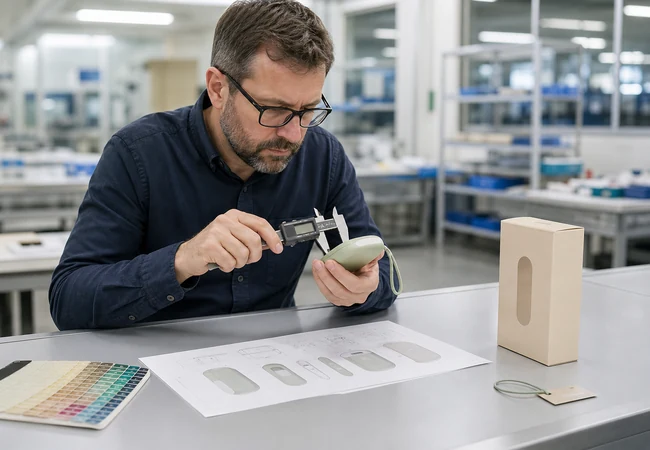
Measure size, fit, and weight
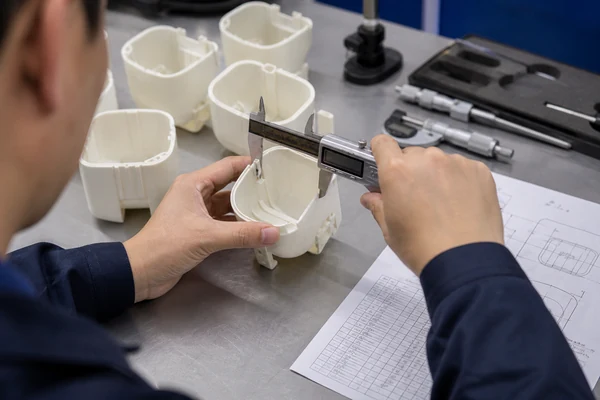
Mark critical dimensions on a drawing and state an acceptable range for each one. Give tighter tolerances only where the product needs them. Unnecessarily tight tolerances can raise cost or rejection rates without improving use.
Test parts together. A lid and container may each meet their separate dimensions but still fit poorly as an assembly. The same issue appears with inserts, cables, fasteners, replacement parts, and accessories.
Review colour under controlled conditions
Screen images, messaging-app photos, and factory lighting can shift colour. For colour-sensitive products, approve a physical reference or a recognised colour code and define the permitted variation. Check different materials separately because the same ink or colour code can look different on plastic, metal, fabric, and coated paper.
Look for repeatable workmanship
Do not stop at the front-facing surface. Check the underside, seams, joints, fasteners, internal assembly, cut edges, print registration, adhesive residue, and areas hidden after assembly. Photograph borderline conditions and label them acceptable or unacceptable. These limit examples give the factory and inspector a clearer standard than adjectives.
Use the product as a customer would
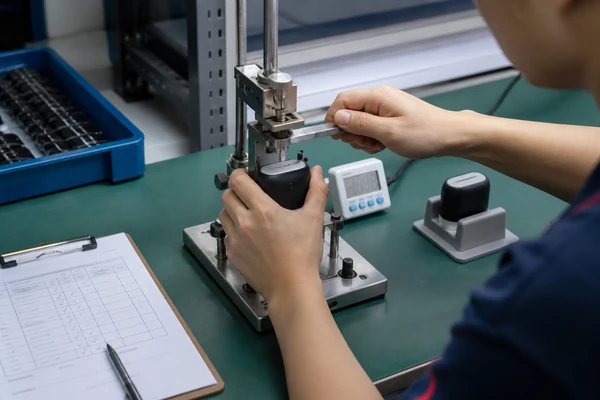
Follow the real operating sequence. Assemble it, load it, wash it, charge it, open and close it, or connect it to the intended accessory as applicable. Define the number of cycles, duration, load, environment, and expected result. A function test should be repeatable by another person using the written instruction.
Check packaging, labels, and the complete selling unit
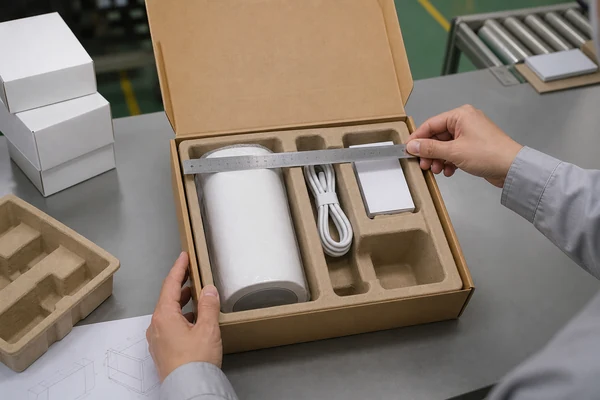
The product sample and the packaged selling unit answer different questions. Once product dimensions and included accessories are stable, assemble one complete retail unit using the final insert, manual, labels, barcode, seals, and packaging materials.
Check that the product does not move or rub against accessories, that the box closes without pressure marks, and that labels remain readable on the intended surface. Verify the quantity per inner carton and export carton, gross weight, carton dimensions, and shipping marks. These figures affect handling and freight estimates, so the final data should also feed into the order’s landed-cost calculation. Buyers planning a first custom order can use Dawon1688’s guide to budgeting a custom product order.
If a separate company supplies the boxes or inserts, define who checks the packaging against the production unit and who handles replacements. The comparison in product supplier versus separate packaging factory explains this handoff in more detail.
Separate sample approval from product compliance
A buyer can approve appearance and function while the product still lacks the testing, documentation, markings, or warnings required in the destination market. The reverse can also happen: a test report may cover safety requirements, yet the delivered unit may have the wrong colour, dimensions, accessories, or packaging.
For products sold in the EU, official guidance says importers must check that applicable safety, health, and environmental requirements are met and that required technical documentation is available. It also notes that a business selling a product under its own name may take on manufacturer responsibilities. See the European Commission’s guidance for importers and distributors and technical documentation.
For regulated consumer products in the United States, testing and certification requirements depend on the product and intended users. Children’s products, for example, may require testing by a CPSC-accepted third-party laboratory. The U.S. Consumer Product Safety Commission’s testing guidance explains that the responsible firm must keep records supporting compliance.
Identify the destination market and applicable rules before final sample approval. Otherwise, a late change to materials, labels, warnings, or construction can force another sample round and may invalidate earlier test evidence. For regulated products, confirm the scope with a qualified compliance professional or accredited laboratory rather than relying only on a supplier’s assurance.
Turn the approved sample into a production control document
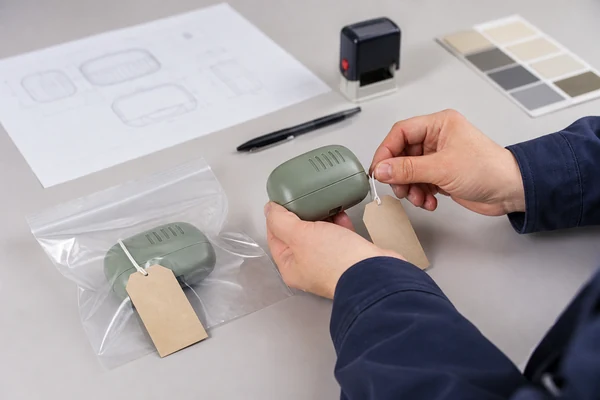
Give the sample a unique identity
Attach a label with the product name, SKU, sample number, specification revision, date, and signatures or written approval reference. Photograph the sample from useful angles and include close-ups of important details. If both parties retain a unit, mark them as matching references.
Write conditional approval clearly
If the sample is acceptable except for defined changes, do not send a vague “approved with changes” message. List every correction, identify who will verify it, and state whether you need a revised sample, photo evidence, measurement record, or production-line check before the order continues.
Freeze the specification and change procedure
Put the final drawing, bill of materials where appropriate, artwork, colour references, packaging file, test method, and defect criteria under revision control. Require the supplier to obtain written approval before changing a material, component, process, subcontractor, or production site that may affect the result.
Define the inspection plan before production
State what will be checked during production and before shipment, how units will be selected, and what causes acceptance, rework, or rejection. Acceptance sampling examines units from a production lot; it does not mean the approved sample alone represents every unit. ISO 2859-1:2026 describes AQL-indexed sampling schemes for lot-by-lot inspection by attributes. The sampling plan and defect limits should suit the product risk, order size, supplier history, and buyer requirements.
When should you refuse to approve the sample?
Pause the order when any point that affects customer use, safety, compliance, assembly, or brand presentation remains unclear. Common stop conditions include:
- the supplier cannot confirm the production material or component;
- critical dimensions have no agreed tolerances;
- the sample uses temporary tooling or hand-finishing that will not be used in production;
- the supplier plans to correct defects during production but provides no verification step;
- the final artwork, label text, warnings, or packed configuration have not been checked;
- required testing or technical evidence covers a different model, material, or construction;
- the supplier will not agree to written change control.
A delayed approval usually costs less than reworking a finished order. If the sample fails, send one consolidated defect list with annotated photos, measurements, and the required outcome. This gives the next sample round a clear purpose.
Sample approval workflow for a custom product order
- Define the requirement. Send a specification, drawings, artwork, intended use, destination market, and packaging needs with the request for quotation.
- Confirm the sample type. Ask whether it is a prototype, pre-production sample, tooling sample, or unit from normal production.
- Inspect against written criteria. Measure, operate, assemble, and photograph the sample. Record results rather than relying on memory.
- Resolve every deviation. Classify it as accepted, rejected, or approved subject to a specific correction. Request another unit when the correction cannot be verified reliably from photos or records.
- Complete compliance work. Check whether the exact materials and construction require testing, documentation, traceability information, labels, or warnings for the sales market.
- Freeze the reference. Identify the approved physical unit and the final revision of every controlled file.
- Release production in writing. Link the approval to the purchase order and state the change-control and inspection requirements.
- Compare production with the reference. Use the same specification and approval sample during in-process or pre-shipment inspection.
If you are still choosing a manufacturer, first establish whether it can reproduce custom requirements consistently. The guide on finding the right supplier for product customization covers that earlier decision.
What should the final approval record contain?
- buyer, supplier, factory, purchase order, product name, SKU, and version;
- sample ID, type, date received, and how it was manufactured;
- approved drawings, specifications, bill of materials where applicable, and tolerances;
- artwork filenames and revisions, colour references, labels, and packaging files;
- measurements, functional test methods, results, and defect photographs;
- compliance reports or documents reviewed, including model and material scope;
- accepted deviations and corrections still requiring verification;
- the person approving, approval date, production quantity, and change-control terms.
Keep the record with the order file. A chat message saying “sample OK” is difficult to apply during inspection and easy to misread months later.
Final answer
Approve mass production only when a traceable sample and a written specification tell the factory what to reproduce and tell the inspector what to accept. Check the manufacturing method, materials, measurements, appearance, function, workmanship, branding, complete packaging, and market requirements. Then freeze the reference, control changes, and inspect the production lot against it.
Frequently asked questions
1. Can I approve a product sample from photos and video?
Photos and video can confirm obvious appearance or simple corrections, but they cannot reliably prove dimensions, material feel, colour under controlled lighting, fit, load, odour, noise, or durability. Remote approval may be reasonable for a low-risk stock product with clear specifications. For a new custom product, obtain a physical sample or arrange an independent inspection when those characteristics affect acceptance.
2. Should the buyer and supplier keep identical sealed samples?
Keeping matching, labelled samples reduces arguments about colour, texture, assembly, and workmanship. Each unit should carry the same sample ID and revision. If exact duplicates are not practical, the supplier should retain the physical reference while the buyer keeps detailed measurements, controlled files, dated photographs, and written confirmation that these records describe the supplier’s sample.
3. What should happen if the factory changes a component after sample approval?
The supplier should disclose the proposed change before using it. Review its effect on fit, performance, appearance, cost, lead time, testing, and compliance evidence. Request a revised sample or targeted test when the effect cannot be confirmed on paper. Record the approved change as a new specification revision; silence should not count as approval.
4. How many samples should I review when a product has several colours or sizes?
Review every variation that changes construction, fit, artwork, material, or process. A shared base model may allow full testing on one version and focused checks on the others, but document that decision. Colourways still need colour and print approval, while sizes may require separate measurements and fit tests. Variable handmade products may need several units to show the expected range.
5. Does a passing laboratory report mean the production sample is approved?
No. A laboratory report covers the specimens, tests, models, materials, and standard stated in its scope. It does not automatically approve workmanship, colour, dimensions, accessories, packaging, or every unit in the order. Confirm that the report matches the final construction, then complete commercial sample approval and production inspection separately.
6. Who should pay for a revised sample when the first sample fails?
Agree on this before sampling. If the buyer changes the design, materials, or artwork, the buyer usually pays the added development cost. If the supplier failed to follow an agreed specification, ask the supplier to remake the sample or credit the fee. The quotation should also state whether sample charges or courier costs can be credited after a bulk order.
7. When should an approved sample be replaced with a new reference?
Create a new approved reference when a material, component, tool, process, subcontractor, factory, artwork, packaging structure, or regulatory requirement changes in a way that may affect the product. Replace a damaged, faded, or degraded physical sample as well. Give the replacement a new revision so old and current standards cannot be confused.