
Quick answer: Before accepting a higher reorder price, confirm that the new quotation covers the same product revision, quantity, packaging, currency, delivery point, and payment terms as the previous order. Ask the supplier to identify each changed cost or condition in writing. Then verify what you can, compare a like-for-like alternative, and calculate the cost of staying, negotiating, or switching without weakening the product specification or quality checks.
Key takeaways
- Check the product and commercial terms first. Two prices are comparable only when they cover the same order.
- Ask for the amount, reason, effective date, and evidence behind each change. “Materials went up” is a starting point, not a cost breakdown.
- Compare the full effect on the order. A lower unit price can be offset by new tooling, sampling, testing, delays, or domestic logistics.
- Do not recover the old price by quietly accepting a lower material grade, thinner construction, different component, or reduced inspection scope.
First, check whether the supplier is quoting the same order
Put the two quotations and purchase orders side by side. A matching SKU or “same as before” message is not enough. Check the quantity split, package, tax basis, currency, delivery point, and product revision.
Alibaba Group describes 1688.com as a domestic wholesale marketplace in China. A listing price and an export-ready customised order may use different assumptions. See Alibaba Group’s description of 1688.
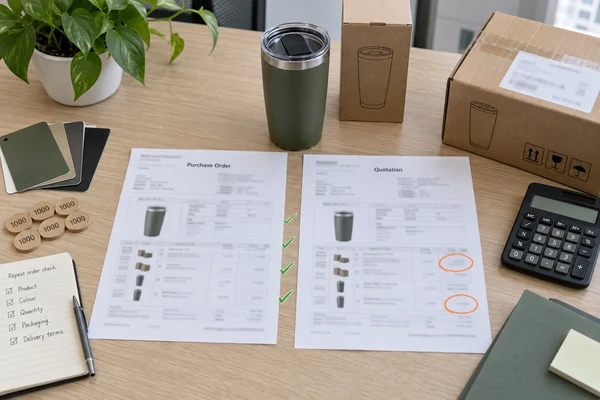
| Field | What to compare | Why it may change the price |
|---|---|---|
| Product revision | Material, dimensions, weight, components, finish, functions, tolerances, and approved sample | A small design or material change can affect purchasing, processing time, yield, and testing. |
| Quantity and mix | Total units and units per model, colour, size, logo, or pack | MOQ and setup work may apply to each variant, not only the combined order. |
| Packaging | Unit pack, inserts, labels, retail box, master carton, pallet, and artwork revision | A new pack size or print run can add component, setup, assembly, and waste costs. |
| Delivery basis | Incoterms rule, named place, domestic freight, export work, and international transport | EXW, FCA, FOB, and delivered prices do not assign the same tasks and costs. |
| Currency and tax basis | CNY or foreign currency, exchange-rate basis, tax or invoice treatment, and bank fees | A supplier may reprice exchange exposure or quote a different invoice basis. |
| Timing | Quote validity, requested completion date, seasonal shutdowns, and capacity reservation | An expired quotation or compressed schedule may require a new production plan. |
If several fields changed, restate the reorder on the earlier basis. Dawon1688’s guide to comparing Chinese supplier quotations explains how to align competing offers.
Why can a repeat-order price increase?
The supplier’s input cost may have changed
Material, component, packaging, subcontracting, and transport costs can move between orders. Ask which input changed, how much of the product cost it represents, and when the new cost took effect.
The IMF Primary Commodity Prices database publishes monthly benchmarks for selected commodities. It can supply context, but it does not show what this factory paid for your specified grade on its purchase date.
The reorder may be less efficient to produce
A reorder can keep the same total quantity while adding colours, sizes, logo versions, or destinations. Shorter runs bring more setup and sorting. A difficult finish or tighter tolerance may also reduce yield. Ask the factory to price these effects separately.
The first price may no longer be valid
The first order may have used an introductory price, leftover material, or an estimate issued before the final sample. Check the original validity period and conditions. If they were missing, add them now and ask whether the increase is temporary or becomes the new standard price.
The supplier may be changing its margin or risk allowance
The supplier may want a higher margin or may be pricing late artwork, sample changes, urgent scheduling, or long payment terms. Get the new basis in writing. An accusation will not produce better evidence.
What evidence should you request from the supplier?
Ask for a bridge from the old quotation to the new one. It should show each changed line. If the supplier will not disclose upstream contracts or full invoices, request redacted evidence tied to the material and date.
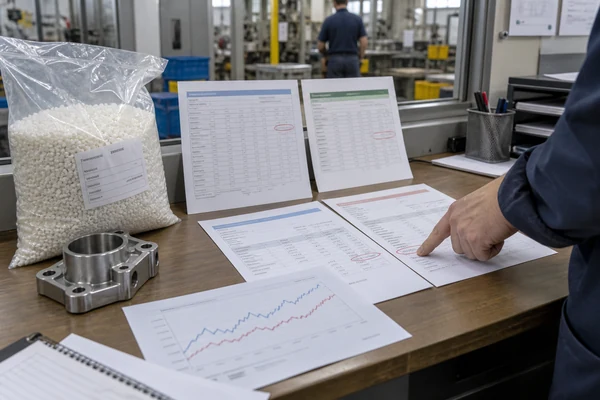
| Supplier explanation | Useful evidence | What the evidence does not prove |
|---|---|---|
| Raw material price increased | Specified grade, old and new effective dates, redacted upstream quotations, purchase records, or a relevant agreed index | A general market chart does not show the amount used in your product or the factory’s purchase price. |
| Component supplier changed its price | Same component part number and specification, dated quotations, MOQ, and effect per finished unit | A new part number may also mean a product change that requires approval and verification. |
| Packaging costs more | Packaging bill of materials, artwork revision, quantity per design, setup charge, and separate packaging quote | A higher carton price does not explain an unrelated increase in the product itself. |
| Exchange rate changed | Quotation currency, CNY cost basis, reference rate, rate date, validity period, and the supplier’s calculation | A currency move does not justify charging the full order twice for the same exposure. |
| Quantity is too low | Price breaks, MOQ by variant, fixed setup costs, material-lot requirement, and alternative quantity scenarios | A larger order is not automatically cheaper if it adds variants or a different production method. |
| Production is urgent | Normal and expedited schedules, added shift or subcontracting plan, extra charge, and quality-control impact | An urgency fee does not show that the promised completion date is achievable. |
A short message often works better than a long negotiation:
Please compare this reorder quotation with purchase order [number]. Confirm whether the product revision, materials, components, packaging, quantity by variant, currency, payment terms, and delivery point are unchanged. For each price difference, show the old amount, new amount, reason, effective date, and available supporting evidence. Please also quote any practical option that keeps the approved product and quality requirements while reducing the increase.
How do you decide whether the increase is reasonable?
Calculate the percentage only after removing new work from the comparison. The basic formula is:
(new comparable unit price - old unit price) / old unit price x 100
If the old price was USD 8.40 and the comparable new price is USD 9.10, the increase is about 8.3%. If the USD 9.10 price now includes a printed retail box that previously cost USD 0.35 separately, adjust the comparison before judging the supplier’s product-price increase.
Then calculate the effect on the whole order and landed cost. Keep recurring unit costs separate from tooling, samples, testing, logistics, duty, tax, and services. The first custom product order budget guide provides a working structure.
Finally, test the explanation against two questions:
- Does the evidence relate to the exact material, component, quantity, date, and product revision in this reorder?
- Is the size of the requested increase consistent with that cost’s share of the finished product?
A ten-percent increase in one input rarely maps directly to a ten-percent rise in the finished product. Ask the supplier to show the calculation.
How can you negotiate without weakening the product?
Keep one option that preserves the approved specification. This gives you a clean baseline. Then ask the supplier to price practical alternatives separately:
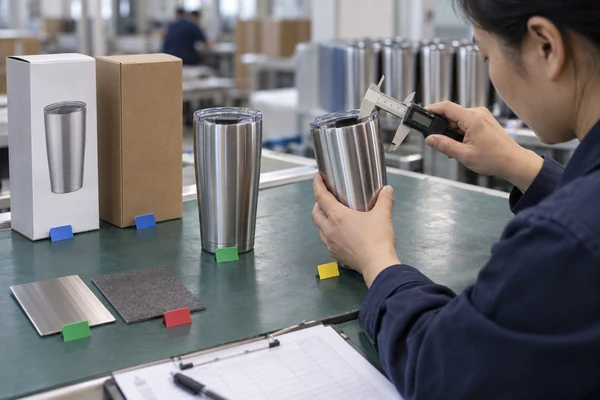
- Change the order quantity or reduce the number of variants in the production run.
- Use simpler packaging while keeping the product itself unchanged.
- Extend the completion date if the increase is tied to expedited production.
- Separate a temporary surcharge from the ongoing unit price and give it an end date or review trigger.
- Agree on price breaks for scheduled releases if the forecast is credible and the purchase commitment is clear.
- Remove a service only when the buyer understands who will perform it and what it will cost elsewhere.
Reject vague savings such as “use a similar material” or “make it a little lighter.” Ask for the proposed grade, component, dimensions, or construction. Check any safety or regulatory effect before production.
For U.S. children’s products subject to CPSC certification rules, a design, process, or component-source change that could affect compliance requires relevant retesting and a new certificate. Other products and markets have different rules. See the CPSC material-change guidance.
Keep the approved sample, inspection access, defect limits, and change-control requirements. A lower-priced product revision needs its own review and sample approval. Dawon1688’s product sample approval checklist explains how to record the reference.
When should you accept, benchmark, or switch suppliers?
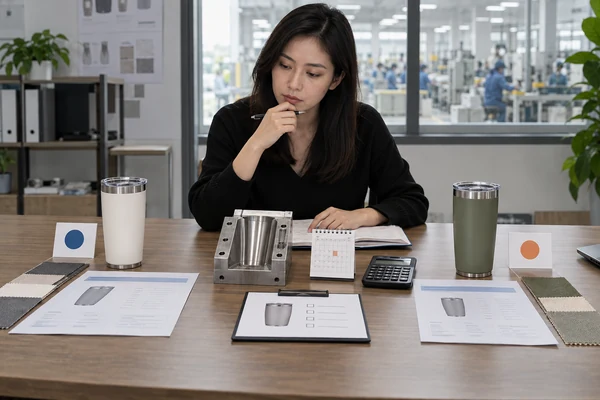
| Situation | Practical response | Control to keep |
|---|---|---|
| The increase is documented, proportionate, and the supplier still fits the order. | Accept it for a defined validity period or negotiate quantity and timing options. | Preserve the approved specification and record the new price basis. |
| The explanation is plausible but incomplete. | Hold approval, request the missing calculation, and obtain one comparable benchmark quote. | Give the benchmark supplier the same files and delivery basis. |
| The supplier will keep the old price only by changing the product. | Request both versions as separate, identified options and evaluate the change. | Require a revised sample and any relevant testing before release. |
| The supplier repeatedly changes price after approval or refuses to state what is included. | Pause the reorder and qualify an alternative supplier. | Protect tooling, files, stock, and continuity before ending the relationship. |
| A new supplier is cheaper only before tooling, samples, tests, and delay are counted. | Compare the transition cost and risk with the value of the expected saving. | Use a pilot order and verify the new production setup. |
A second quotation is a benchmark. The other factory may assume a different material or omit packaging, so give it the same RFQ and require it to identify deviations.
Switching costs include sampling, tooling, compliance review, inspection, packaging work, old-stock compatibility, and delay. If the move still makes sense, use the customisation supplier selection guide to qualify the new production site.
What if the supplier changes the price after you paid a deposit?
Check the accepted quotation, purchase order, validity language, adjustment clause, product revision, and work already authorised by the deposit. Require a revised quotation or change request instead of editing the deal through scattered chat messages.
The revision should state the reason, amount, affected quantity, schedule effect, and result if the buyer declines. Hold further payment until the order and payment record agree. Cancellation, performance, and cost-recovery rights depend on the documents, payment route, facts, and applicable law. Obtain legal advice for a material dispute.
A proposed material or component substitution needs its own product and compliance review.
The Chinese supplier deposit checklist covers the records and payment triggers that should be fixed before production begins.
How can you reduce surprise price changes on future reorders?
A quotation cannot freeze every external cost forever. It can define when and how the price will be reviewed. Record:
- the product, packaging, artwork, and approved-sample revisions covered by the price;
- the quantity and MOQ basis for every model, colour, size, and pack;
- the currency, tax basis, payment terms, fees, and rounding method;
- the Incoterms 2020 rule and exact named place or port;
- the quotation expiry date and any material or exchange-rate condition;
- which change requires advance notice, evidence, and buyer approval;
- whether a surcharge is temporary and when it will be reviewed;
- the evidence required before the next payment and shipment release.
The International Chamber of Commerce explains that Incoterms 2020 assigns delivery obligations, risks, and costs. It does not set the time, method, or currency of payment. Record the delivery rule and commercial price terms separately. See the ICC’s Incoterms 2020 overview and Incoterms 2020 Q&A.
Keep the reorder specification current as well. An unchanged price is not a success if the second batch quietly changes. The guide to repeat-order quality differences explains how to compare batches and control revisions.
Repeat-order price review checklist
- Record the revised quotation’s date, revision, currency, and validity.
- Compare the previous and new product, packaging, quantity, delivery, payment, and timing basis.
- Separate new scope from the price increase on the original scope.
- Request each changed amount, reason, date, and available evidence.
- Check whether any cost-saving option changes the approved product or compliance basis.
- Calculate the effect per unit, per order, and on landed cost.
- Obtain a like-for-like benchmark when the explanation or amount remains unclear.
- Compare the cost of staying with the full cost and delay of changing suppliers.
- Record the price, surcharges, review triggers, and change-control terms in the new order.
Can Dawon1688 help review a repeat-order price?
Dawon1688 can help compare the old and new quotation, request missing details, collect comparable offers, coordinate samples, and arrange checking in China within the agreed service scope. The review will expose assumptions; it cannot prove a factory cost that the supplier has not disclosed.
Contact Dawon1688 about a repeat-order quotation with both quotations, the product and packaging revisions, quantity by variant, destination, delivery date, and the supplier’s explanation. Remove passwords and unrelated confidential information.
Final answer
A Chinese supplier’s reorder price can rise for a valid cost or commercial reason, but the buyer needs a comparable quotation and a written explanation. Verify the changed basis, protect the approved product, and compare the total cost of accepting, negotiating, or switching before releasing the order.
Frequently asked questions
1. How do I calculate the percentage increase on a supplier’s reorder price?
Subtract the old comparable unit price from the new comparable unit price, divide the difference by the old price, and multiply by 100. Remove newly added packaging, services, freight, or specification changes first. Also calculate the total order difference, because a small percentage can still have a large cash effect at volume.
2. Can I ask a Chinese supplier for its raw-material invoices?
You can ask, but the supplier may consider its upstream prices and sources confidential. A practical alternative is a redacted invoice, two dated material quotations, the exact material grade, or an agreed public index. Check that the dates and material match your reorder. None of these alone reveals the supplier’s complete production cost.
3. Is it better to request the repeat-order quotation in CNY instead of USD?
A CNY quotation can make the domestic product-cost basis easier to see, but it moves more exchange-rate exposure to the buyer. A USD quotation may include the supplier’s currency allowance. Compare both using the same payment date, fees, validity period, and delivery terms. The better currency is the one your payment process can manage and document clearly.
4. Why did the price increase for only one colour or size?
That variant may use a different pigment, fabric, component, mould, print setup, material lot, or packaging run. Its quantity may also fall below an upstream MOQ even when the total order is unchanged. Ask for the MOQ and cost basis for that variant, then check whether combining production dates or simplifying the range changes the quotation.
5. Can I combine several SKUs to get the old unit price?
Only if the supplier’s cost driver is shared across those SKUs. Products may share a material purchase or carton, while still requiring separate tools, colours, labels, and production setups. Ask which quantities can genuinely be combined for pricing. Put the price and MOQ for each SKU in the quotation instead of relying on the total unit count.
6. Can a supplier change the price after I accepted a pro forma invoice?
Whether the supplier can require a new price depends on the accepted documents, validity and adjustment terms, product changes, payment status, applicable law, and the facts behind the request. Ask for a formal revision and do not approve it through silence. Preserve the quotation, purchase order, payment record, and messages, and seek legal advice if the dispute is material.
7. Should I keep a backup supplier after the current supplier agrees to the old price?
Consider one when supply interruption would be costly and the product can be qualified at a second factory without creating disproportionate tooling, consistency, compliance, or IP risk. A contact who once sent a cheap quote is not yet a backup supplier. Keep current samples, capability evidence, terms, and a transition plan if continuity matters.